Mad in South Asia
Mad in South Asia Winter Workshop 2026
Critical Qualitative Research: Theory, Method and Practice
Register – Rest of World
Overview
About the Event
Qualitative research is an established component of research training across disciplines. Yet critical qualitative research asks us to look beyond an exposure to methods and techniques, to examine how knowledge is produced: What counts as knowledge? Whose knowledge is recognised? How do our own positions and theoretical commitments shape what can be known? These questions are particularly significant in South Asia, where histories of colonial knowledge production, diverse social and cultural worlds, institutional practices, and multiple understandings shape how people are understood and experience is researched. A critical qualitative inquiry invites us to examine how dominant categories and frameworks make certain realities visible while rendering others less visible, and how knowledge is produced, negotiated, and contested within South Asian contexts.
This workshop offers an introduction to qualitative inquiry, bringing together philosophical, methodological, and applied perspectives. Across three modules on ethnography and fieldwork, Critical Discourse Analysis, and observation as an epistemic practice, the workshop will explore how daily lives are constituted through everyday practices, institutions, language, and culture. Participants will engage with questions of reflexivity, positionality, ethics, and the production of knowledge, while developing practical insight into observation, interviewing, fieldnotes, ethnographic analysis, and the analysis of discourse, power, and ideology in contemporary mental health contexts. During the engagement hour, they will work with real data to gain practical experience around analysis.
Whether you are an early scholar who wants to learn about qualitative research or a seasoned researcher who needs to understand the nuances of research in other cultures in order to avoid extractive practices, this training is for you.
Curriculum
Workshop Structure
The workshop has 3 modules, held over 6 sessions across three months, with each module led by a different expert.
Module 1
Foundations of Qualitative Research in Mental Health: Ethnography and Fieldwork
Session 1: Philosophical Underpinnings of Qualitative Research, Ethics, Positionality, and Reflexivity
Learning Objectives
By the end of this session, participants will be able to:
- Understand the foundations of qualitative research and explain why qualitative approaches are particularly valuable for studying mental health and lived experience.
- Critically examine the limitations of quantitative methods and epidemiological approaches in addressing the complexity, context, and meaning of mental health phenomena.
- Explore key relevant debates—including objectivity versus subjectivity, and brain-based versus person-centered understandings—and appreciate the role of reflexivity and positionality in knowledge production.
- Formulate meaningful qualitative research questions by recognising common challenges such as context minimisation, the fundamental attribution error, voice poverty, and ethical issues in mental health research, including participatory approaches.
- Identify the principles of rigour, trustworthiness, and quality in qualitative research and address common questions surrounding methodological validity.
Session 2: Ethnography and Fieldwork in Mental Health Research
As part of the engagement, participants will analyse data shared by Dr. Kottai to gain hands-on experience with the method and practice of ethnography.
Learning Objectives
By the end of this session, participants will be able to:
- Develop a practical understanding of ethnography as a qualitative methodology and its application to mental health research across diverse community settings.
- Gain insight into the realities of conducting ethnographic fieldwork through reflections on transitioning from quantitative to qualitative research during doctoral training.
- Learn strategies for engaging with multiple stakeholders—including service users, caregivers, mental health professionals, and community volunteers—and appreciate the value of attending to diverse perspectives.
- Understand the practical processes of ethnographic research, including negotiating access through gatekeepers, maintaining fieldnotes and field diaries, and navigating ethical and relational challenges in the field.
- Analyse ethnographic vignettes drawn from observations, interviews, and home visits to understand how qualitative data are generated, interpreted, and transformed into meaningful research findings.
Engagement / Analysis Hour
A dedicated hour of guided discussion, practical application, and critical analysis where participants apply the module’s concepts and methods to real-world qualitative research questions and materials.
Learning Outcomes
By the end of this session, participants will:
- Reflect on the intellectual, practical, and personal dimensions of conducting qualitative research in mental health.
- Develop a realistic understanding of the opportunities and challenges involved in ethnographic fieldwork through an interactive discussion with an experienced qualitative researcher.
- Gain practical guidance on whether qualitative research aligns with their research interests, temperament, and career aspirations, particularly in the field of mental health.
Module 2
Critical Discourse Analysis through Mental Health Discourse in Neoliberal Times
Session 3: Introducing CDA — Discourse, Power, and Critical Questions
Learning Objectives
By the end of this session, participants will be able to:
- Understand discourse as making our social reality; distinguish between discourse as simply language-in-use and discourse as a way of representing a subject, organising social relations, and rendering meanings as natural.
- Examine how mental health discourse creates psychological realities; how categories such as distress, trauma, recovery, resilience, toxicity, and normalcy shape the ways experiences are recognised, interpreted, and responded to.
- Explain the central theoretical assumptions of CDA, including the dialectical relationship between discourse and social structures; the role of language in reproducing or contesting power and ideology; and the historical and institutional mediation of meaning.
- Differentiate the analytic emphasis of CDA from Foucauldian Discourse Analysis and Discursive Psychology.
- Develop a preliminary CDA research question, moving from a broad concern to a specific discourse. Participants will consider how questions about mental health can be reformulated to examine how mental health categories are constructed across digital, therapeutic, institutional, and corporate settings.
Session 4: Doing CDA — From Description to Critical Explanation
Learning Objectives
By the end of this session, participants should be able to:
- Understand Fairclough’s three-dimensional approach as an interconnected analytic movement across text, discursive practice, and social practice.
- Undertake close description of discourse, attend to vocabulary, categorisation, agency, modality, metaphor, evaluation, presupposition, silence, and absence, and consider how these features shape meanings of distress, care, recovery, and normalcy.
- Understand how discourse is produced, circulated, and taken up through an examination of genre, authorship and authority, intended audiences, institutional and platform contexts, and intertextuality.
- Develop an explanation that connects discursive patterns to wider social practices and power relations. These include the neoliberal individualisation of care, the distribution of responsibility between institutions, families, and individuals, and the shaping of the resilient, self-managing, or well-adjusted subject.
- Build interpretations that are grounded in discursive evidence. Participants will learn how to distinguish between what the material shows, what contextual knowledge explains, and what claims can reasonably be made about ideology, inequality, and social effects.
Engagement / Analysis Hour
As part of the engagement, participants will analyse a contemporary mental health discourse using Fairclough’s framework. They will examine how meanings are produced and how they relate to dominant notions of normalcy in neoliberal contexts.
Module 3
Observation as an Epistemic Practice
Session 5: Observation: More Than a Method
Learning Objectives
By the end of this session, participants will be able to:
- Understand that observation is far more than a passive method of data collection—it is foundational to qualitative research and actively shapes the production of knowledge.
- Examine how theories, commitments to certain forms of knowledge, and disciplinary traditions influence what researchers observe, document, and interpret.
- Appreciate the central role of observation in qualitative mental health research and its potential to generate rich, contextually grounded understandings of lived experience.
Session 6: Reflexive and Contextual Approaches to Observation
Learning Objectives
By the end of this session, participants will be able to:
- Critically reflect on how the researcher’s social location, cultural background, emotions, and sensory engagement shape the process of observation and interpretation.
- Explore interdisciplinary perspectives from cultural psychology, developmental psychology, anthropology, phenomenology, and ethnography to strengthen observational practice.
- Develop concrete strategies for conducting rigorous, reflexive, and contextually sensitive observations in qualitative mental health research.
- Learn how to conduct observations in congruence with the above-stated standards and priorities.
Engagement / Analysis Hour
A dedicated hour of guided discussion, practical application, and critical analysis where participants apply the module’s concepts and methods to real-world qualitative research questions and materials.
Learning Outcomes
By the end of this module, participants will:
- Develop a deeper understanding of observation as a theoretically informed and reflexive practice central to qualitative inquiry.
- Be able to critically evaluate how knowledge is produced through observation and how researchers’ perspectives shape what is seen and interpreted.
- Gain practical insights into applying observational methods to generate rich, culturally informed, and contextually grounded qualitative research in mental health.
Attending the workshop
When you join live you get:
- Live Q&A sessions with the trainer
- Ability to connect with other like-minded professionals
- Real-time feedback
Can’t make it live?
Those who register will receive a recording of the event when it becomes available. It will be available for 2 weeks after the event date. We highly recommend live participation given it’s a workshop and will involve working together on cases and projects.
Faculty
About The Trainers
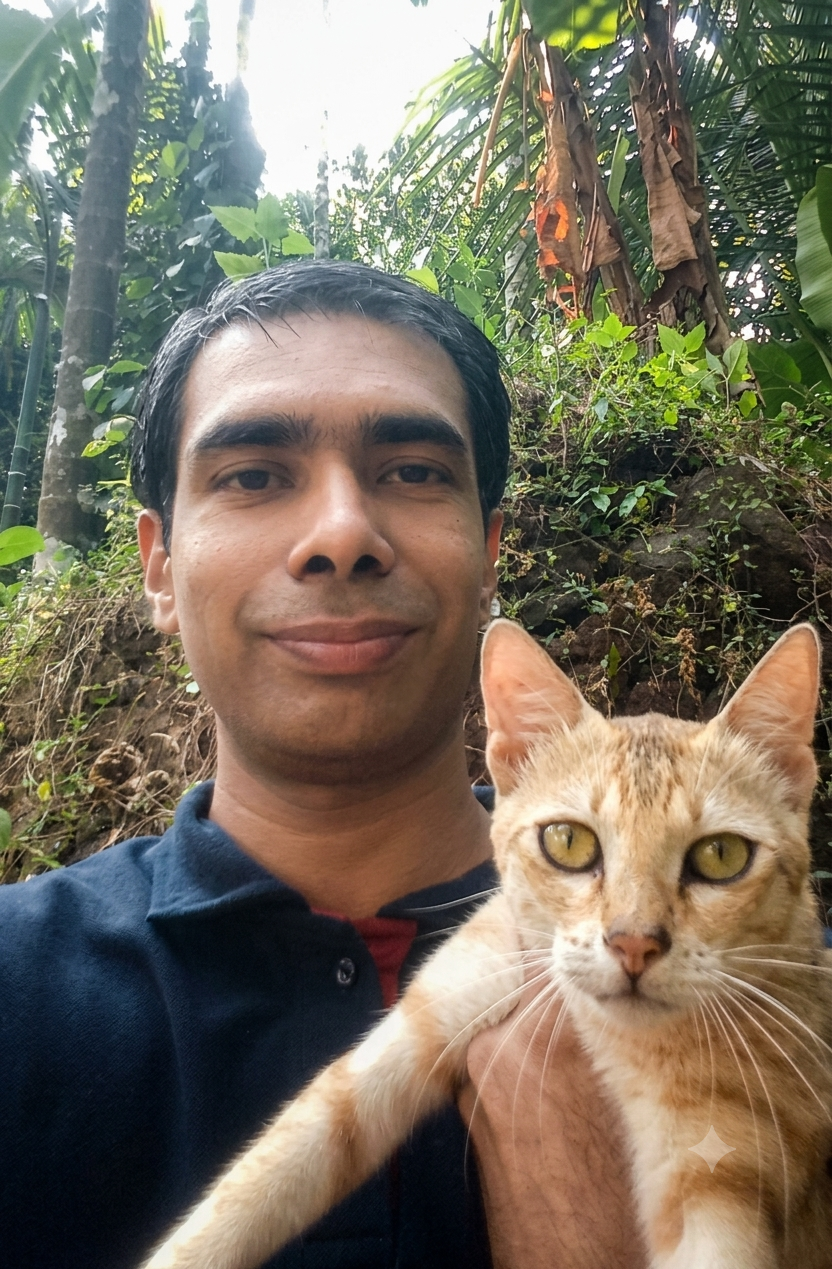
Dr. Sudarshan R. Kottai
Dr. Sudarshan R. Kottai is an Assistant Professor in the Department of Humanities and Social Sciences at the Indian Institute of Technology Palakkad and a Distinguished Fellow at the Centre for Equity Studies, New Delhi. Trained as a clinical psychologist, Dr. Kottai brings together clinical psychology, medical anthropology, sociology, ethics, and critical theory to examine how mental health systems shape—and are shaped by—the social and political worlds in which people live.
Read full bio
His research at IIT Hyderabad examined the everyday narratives and practices through which mental health care and chronicity are constructed by state and biomedical discourses. His subsequent scholarship has extended this inquiry to community mental health, psychiatric systems, marginality, sexuality and gender, disability, migration, and the politics of expertise. A central concern of his work is the question of whether mental health disciplines merely mirror existing social realities or can participate in world-making—creating more just, inclusive, and humane possibilities for care.
His work is informed by an ethic of care and epistemic justice, with particular attention to LGBTQIA+ communities and to the ways that dominant psychiatric and psychological frameworks can silence, pathologize, or exclude alternative accounts of distress and wellbeing.
Dr. Kottai’s work has received several recognitions. He was awarded the DAAD Bilateral Exchange of Academics Grant in 2025 for academic exchange at the University of Münster. He was also a recipient of the FMES–Indian Journal of Medical Ethics Award of Appreciation (2022–23), Category 1: Advocates/Champions foregrounding lived experiences and contributing to ethical practices for rights-based mental health care. His earlier recognitions include the Research Appreciation Award from IIT Hyderabad (2019), a Public Health Ethics WriteShop Fellowship (2022), and selection for a Dissertation-to-Book Workshop at the University of Wisconsin–Madison’s Conference on South Asia (2021).
He is also a co-editor of a forthcoming special issue of History of Psychiatry on “Crises, marginality and suffering: Revisiting socio-political and economic turmoil in South Asia.”
Alongside his academic work, Dr. Kottai is an active public intellectual whose writing has appeared in The Hindu, The Indian Express, The Telegraph, Economic & Political Weekly, and Mad in South Asia, where he has written on mental health policy, suicide, community care, sexuality, education, and the politics of mental health.
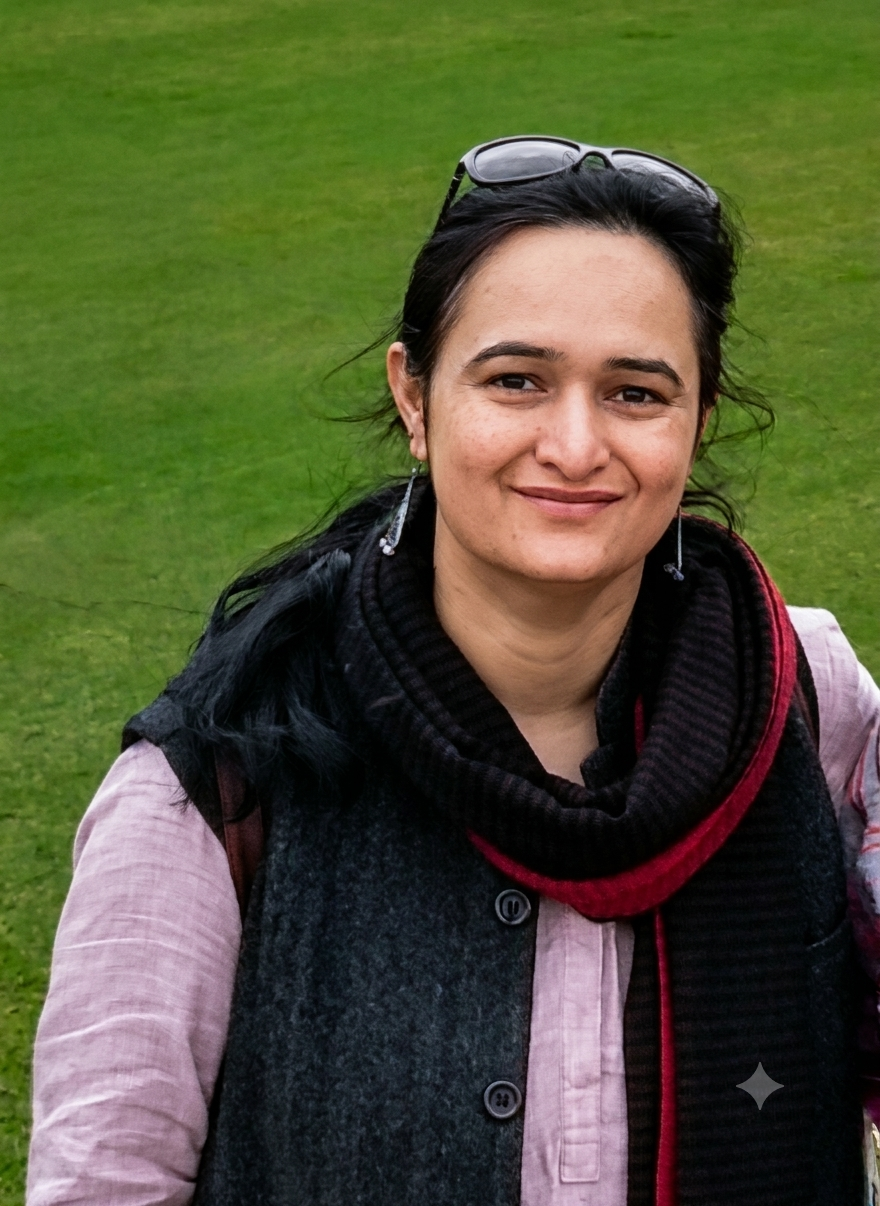
Dr. Shivani Nag
Dr. Shivani Nag is an Assistant Professor in the School of Education Studies at Dr. B. R. Ambedkar University Delhi, whose interdisciplinary scholarship brings together education, cultural psychology, language, and critical and feminist pedagogies.
Read full bio
Dr. Nag’s work is centrally concerned with questions of marginalization, language, culture, power, and epistemic justice in educational spaces. Her research in school and higher education contexts examines how socio-cultural and linguistic hierarchies shape academic participation, access to academic knowledge, and opportunities to contribute to knowledge production, including whose languages and epistemic locations can shape academic questions, concepts, and theorisation. A related strand focuses on women’s participation and membership within academic communities and examines how formal and informal institutional norms shape women’s experiences, participation, and emerging academic identities.
Qualitative research methodology is an important dimension of her teaching and academic engagement. She teaches qualitative research and discourse analysis at postgraduate and doctoral levels and has conducted several workshops on qualitative research, including workshops on Critical Discourse Analysis at the 34th and 35th Annual Conventions of the National Academy of Psychology at Christ University in 2025 and IIM Shillong in 2026, respectively. She is currently co-editing Doing Qualitative Research in India.
Dr. Nag has received several notable recognitions. She was awarded the ‘Emerging Psychologist’ award by the National Academy of Psychology in 2014. In 2019, she was invited to speak at the United Nations Forum on Minority Issues in Geneva on the theme ‘Public Policy Objectives for Education in Minority Languages’. In the same year, she was selected for an ERASMUS+ inter-university teaching exchange at Ludwigsburg University of Education, Germany. She received the Prof. Durganand Sinha Award for Best Doctoral Dissertation from the National Academy of Psychology in 2016. In 2022, she received the Best Paper Award at an international conference on ‘Changing Gender Climates: Equality Today for Building a Sustainable Future Tomorrow’. She has also presented her research at major international academic forums.
Alongside her academic work, she contributes to public conversations on questions of exclusion, equality, and justice in education through writing in papers, popular magazines, and social forums.
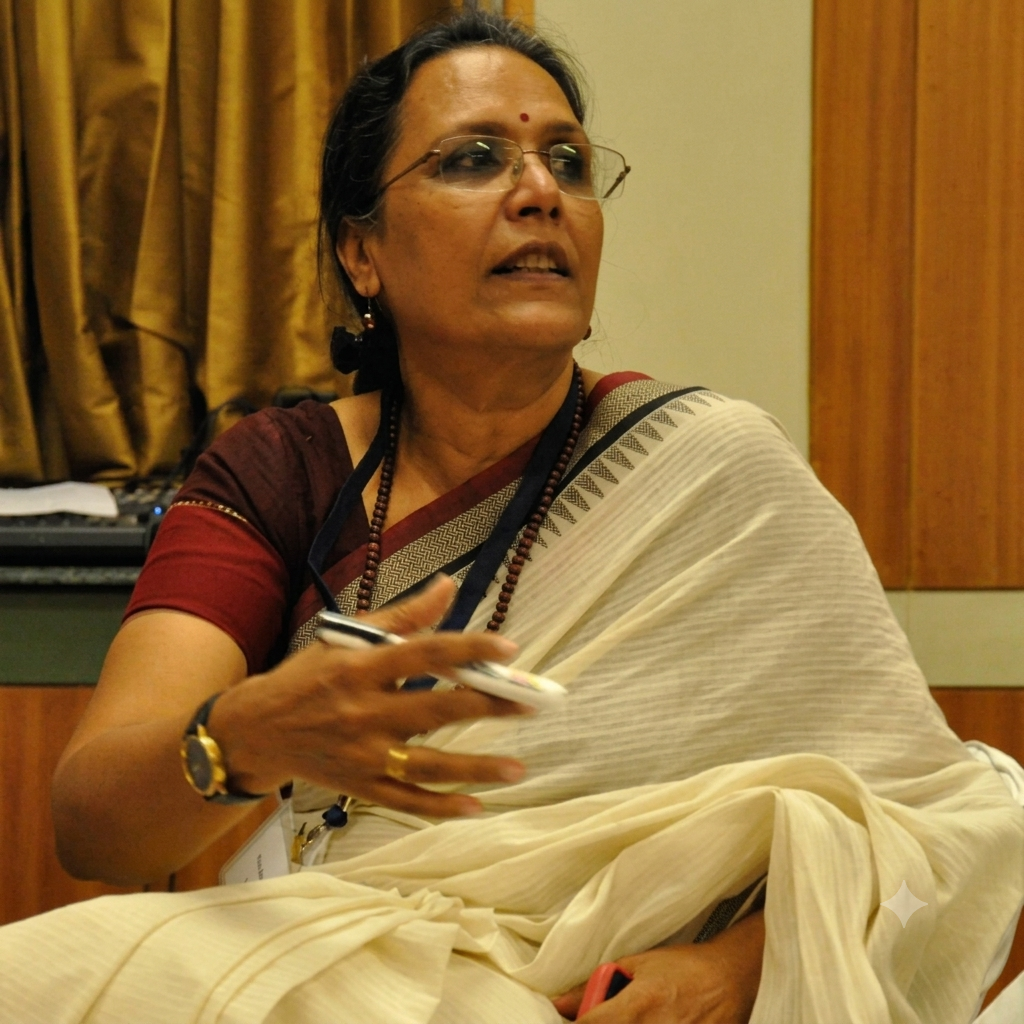
Prof. Nandita Chaudhary, PhD
Prof. Nandita Chaudhary is a distinguished scholar of cultural and developmental psychology, whose work has fundamentally shaped understandings of childhood, family life, socialization, and psychological development in cultural context. She taught at University of Delhi and has held visiting and collaborative positions internationally, including at the Federal University of Bahia, Brazil.
Read full bio
Her scholarship challenges universalist and Western-centric assumptions in psychology by examining how psychological realities are constructed through everyday cultural practices, relationships, language, and social worlds. She has collaborated with scholars and institutions across India, the United States, Germany, Denmark, and Brazil and has contributed extensively to international conversations on cultural psychology and the Global South.
Her international recognition includes a Fulbright Award for pre-doctoral study at Clark University, USA; the Witkin-Okonji Award from the International Association for Cross-Cultural Psychology in 2000 and 2008; ICSSR Awards in 2000 and 2006; and University Grants Commission Awards in 2000 and 2006. In 2012–2014, she was a Senior Fellow of the Indian Council of Social Science Research, supporting her research on self and identity in young children in contemporary Indian families. In 2019 she was honoured by the Lady Irwin College Alumnae Association and the College for her lifetime contribution. She has also been a visiting scholar in Life-Course Studies at the University of Copenhagen. Prof. Chaudhary has served the field through editorial, advisory, and professional roles, including as an Associate Editor of Culture & Psychology.
Prof. Chaudhary is the author of Listening to Culture: Constructing Reality from Everyday Talk (SAGE, 2004) and has edited or co-edited several influential volumes, including Researching Families and Children: Culturally Appropriate Methods, Dynamic Process Methodology in the Social and Developmental Sciences, Cultural Realities of Being, Cultural Psychology and Its Future, and Resistance in Everyday Life. Her recent work continues to question dominant models of developmental psychology and to foreground perspectives emerging from the Global South. She is also co-editor of Reframing Developmental Psychology: Perspectives from the Global South (2025).
Prof. Chaudhary has served the field through editorial, advisory, and professional roles, including as an Associate Editor of Culture & Psychology. Her work brings together cultural psychology, developmental science, ethnography, and the study of everyday life, offering an important alternative to approaches that treat psychological development as culturally universal.
Fees
Pricing
| Registration option | USD | INR |
|---|---|---|
| Full Workshop | $600 | INR 20,000 |
| Discounted Rate for whole workshop | $550 | INR 18,000 |
| Early bird registration discount (until Sept 15th) | $540 | INR 17,000 |
| Student discounted rate with valid ID | $400 | INR 12,000 |
| Low fee spots (limited 10 slots) | $100 | 5000 INR |
For student pricing please send an email to [email protected] from your institution email address with a copy of valid student ID.
Please write to us with details about your interest in the workshop.
Join the Winter Workshop 2026
Critical Qualitative Research: Theory, Method and Practice — 6 live sessions, October to December 2026.