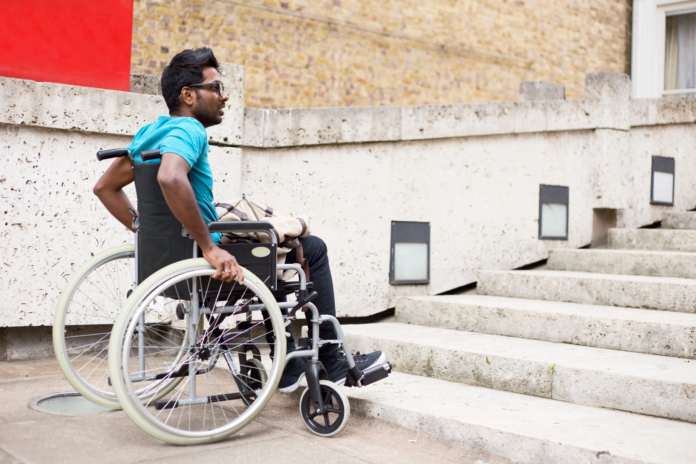

I wish I could begin by saying that when I reached the exam centre, an orthopedically disabled candidate arrived, checked in smoothly, received a wheelchair, and was taken through a lift to the examination hall. I wish I could say he wrote his exam with dignity because everything was inclusive.
I wish that were the truth.
One day, I went to write an exam at a national-level examination centre. A disabled candidate arrived on a four-wheeler mobility device. As a visually impaired person myself, I was navigating my own challenges, moving slowly to avoid collisions. Suddenly, I heard a sound, someone approaching.
I paused and looked around.
What I saw is something this country prefers not to see:
a man, an educated candidate like all of us,
crawling on a wet, muddy floor
to get his documents verified.
There was a ramp, but no wheelchair.
There were staff members, but no tools for them to help.
There was effort, but no infrastructure.
The man dragged himself forward, palms and clothes soaked in dirty rainwater, just to attempt the same test every “abled” candidate could take comfortably on two feet.
And what could I do? Nothing.
What could the staff do? Nothing.
Not because they didn’t care,
but because the system didn’t provide the tools.
This is what exclusion looks like. It is not just mud on the floor or a man crawling through it. It is the reminder that even the most educated spaces, national exam centres lack the basic mindset and tools needed for inclusion.
For visually impaired candidates, accommodations like extra time or a scribe exist because they are easy and cost nothing.
But building a lift?
Keeping a wheelchair?
Designing accessible pathways?
These require infrastructure, planning, and money and so the system avoids them.
This pattern repeats everywhere. Workplaces adjust desks for orthopedically impaired employees but hesitate to invest in technology for blind or low-vision employees. Schools provide scribes but ignore accessible digital formats.
Inclusion is offered only when it is easy,
not when it is necessary.
The man who crawled that day was educated. He had every right to be there. What he lacked was not ability or determination but infrastructure.
The failure was not his.
The failure was not the staff’s.
The failure was the system’s.
Education empowers people. But in our society, it often empowers the disabled only to endure exclusion, not escape it.
Divya S
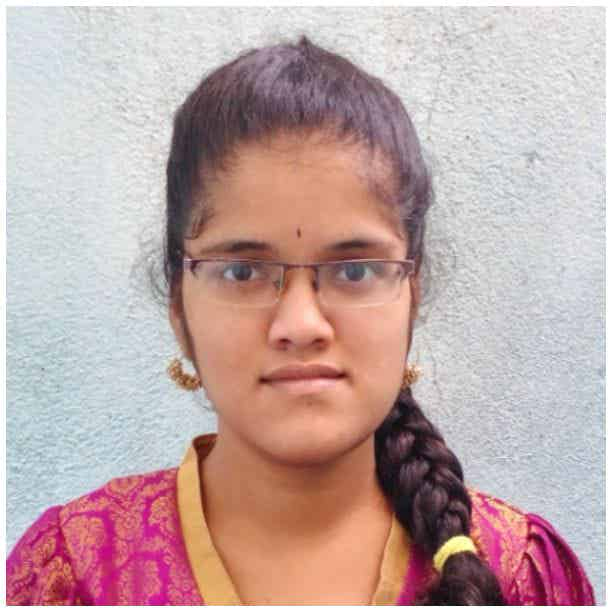
Divya S, is a visually impaired writer from India who writes on disability, dignity, and social inclusion, drawing from lived experience. She is a commerce graduate.