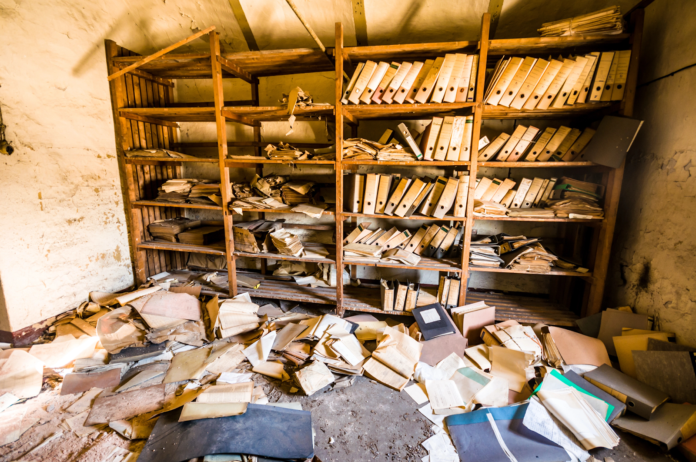

A new commentary in the Indian Journal of Medical Ethics argues that the history of mental health in India remains unfinished because the most important evidence is locked away in inaccessible archives. The authors explain that without colonial medical records, it becomes impossible to piece together how famine, caste oppression, displacement, and labour exploitation shaped psychological distress in South India. They warn that this archival silence leaves today’s mental health systems disconnected from the social and historical forces that produced suffering in the first place.
“It is very difficult to access documents from the second half of the nineteenth century,” the authors write, describing nearly a month of searching for material that ultimately turned up empty-handed.
Wars, Famines, and Mental Health: The Importance of History
Across the world, historians and clinicians are increasingly paying attention to the ways that trauma, war, forced migration, and systemic oppression shape the mental health of entire communities. Research from the Caribbean, for instance, has linked elevated suicide rates among descendants of Indian indentured labourers to the psychological legacies of displacement, strict cultural expectations, and tension between traditional values and life in the diaspora.
India, the authors note, has its own long history of upheaval, including colonial famines, the violence of Partition, industrial disasters such as the Bhopal gas leak, and the experiences of refugee communities fleeing war in Sri Lanka. These events affected millions, yet they are rarely acknowledged in mainstream psychiatric practice. Instead, distress is often framed as a biological disorder located within the individual. This approach sidelines the social, cultural, and political conditions that often give rise to mental health crises.
One reason for this gap, the authors argue, is the absence of historical material.
Case files from asylums in the late nineteenth century could illuminate who was institutionalised, under what circumstances, and how colonial medical systems interpreted suffering among people living through famine and upheaval. Without such documentation, mental health research risks reproducing the same colonial blind spots that helped create the systems we use today.
The researchers aimed to examine archival and institutional records from the Madras Presidency during a period marked by repeated famines between 1865 and 1901. Their goal was to understand how environmental and social crises influenced suicide patterns, asylum admissions, and the ways colonial authorities diagnosed or responded to psychological distress.
Invisible or Erased? The Missing History of Colonial Psychiatry
Some archival information was available in dispersed sources, such as administrative reports and annual summaries of the Madras Presidency. These scattered documents offered early clues about how colonial crises translated into mental distress.
They showed that suicide rates rose sharply during the Great Famine of 1876 to 1878, with women disproportionately affected. At the same time, admissions to asylums increased, and the majority of those admitted were landless labourers who had lost livelihoods and food security during the famine.
To the authors, this pattern suggests that mental distress in the late nineteenth century closely tracked conditions of poverty, hunger, displacement, and social breakdown.
Despite these insights, the researchers encountered striking gaps. Their search across two states took them to state-owned archives, district bureaucracies, public libraries, mental hospitals that originated as colonial asylums, and multiple health and welfare departments. At every step, they met resistance or uncertainty. Some offices simply stated that nineteenth century records were not held at their location. Others reported that the files existed but could not be retrieved because they were brittle, uncatalogued, or stored in rooms the public could not enter.
Records that should have been preserved in hospitals that directly descended from colonial institutions were nowhere to be found.
The bureaucratic barriers were not minor. In one case, the researchers obtained official written permission to access a storage room at a health department, only for staff members to deny them entry once they arrived. In other cases, emails went unanswered and follow-up visits yielded vague explanations about missing files or misplaced collections. Even institutions that actively train modern mental health professionals, including large government teaching hospitals and psychiatric research centres, had neither retained nor digitised the case material that would document how these facilities evolved from colonial-era asylums.
Taken together, these experiences led the authors to conclude that the most significant finding of their project is the absence of records that should exist. They argue that this absence is not accidental. Instead, it reflects structural neglect, institutional disinterest, and a broader lack of recognition that historical documentation is critical to understanding and improving mental health systems today.
By overlooking archives that could reveal the lived realities of the poor, women, indentured labourers, and other marginalised people, the current system continues to obscure the social and political forces that shaped how mental illness was defined and treated.
The authors describe this as a form of historical erasure that makes it harder not only to study the past but to acknowledge the experiences of those whose suffering filled colonial asylums. In their view, the missing documents are themselves a data point, pointing toward a mental health establishment that has yet to take seriously the importance of historical context or the ethical responsibility to preserve and make accessible the stories of those who came before.
Accidental Silences and Forced Marginalization
The authors argue that the inaccessibility of archives creates a fundamental obstacle for both researchers and clinicians. Without historical case records, it becomes difficult to understand how generations of structural violence shaped patterns of illness, diagnosis, and institutionalisation. This makes it harder for mental health professionals to recognise the social origins of suffering or to design systems that respond to lived realities rather than reducing all distress to chemical imbalance or individual pathology.
They acknowledge that their own findings rely heavily on surviving documents, secondary literature, and experiential accounts, which means that their conclusions are necessarily incomplete. Yet, in their view, this incompleteness is the point. The gaps in the record represent the silenced experiences of marginalised people who lived through famine, dispossession, and colonial rule. To work ethically in the present, they argue, policymakers, clinicians, and researchers must prioritise the preservation and digitisation of archives and must integrate historical consciousness into mental health training and practice.
Reference:
Sathya, D., & Kottai, S. R. (2025). Archives, mental health systems, and the history of mental health in colonial South India: Critical questions. Indian Journal of Medical Ethics. Advance online publication. https://doi.org/10.20529/IJME.2025.092
Link to Study: https://doi.org/10.20529/IJME.2025.092
Researcher Contact Info:
Sathya D (Corresponding author) [email protected]
IIT Palakkad, Department of Humanities and Social Sciences

Neil Nallan Chakravartula
Neil Nallan Chakravartula is an aspiring social and critical psychologist, currently pursuing his Master’s in Psychology at the University of Mumbai. He holds a BSc in Psychology from Christ University, Bangalore. With experience in clinical, community, and research settings, Neil is interested in the tangled intersections of mental health, society, and power. He enjoys asking difficult questions - especially the kind that make people in the clinical world just a little uncomfortable.