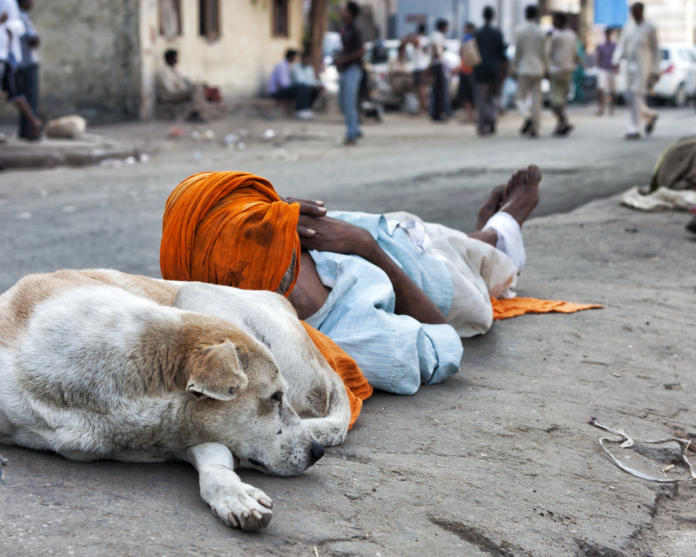


In the more casual discussions that take place in community mental health settings in the urban regions of the province of Gujarat, in parks, homes, coffee shops, and communal gathering spaces, one finds under-talked-about discourses on loneliness. These are not expressed in technical language, but in terms of stories of everyday life.
One of the themes that came out of You Are Not Alone, a mental health movement that was based on peer talk, was the significance of having animals on the street as a way of regulating emotions and grounding. This was a common theme, as students, caregivers, and young professionals would talk about how it made them feel better to feed a certain dog that was known in their area or, better yet, to have a cat accompany them on their evening stroll, cows in the street or monkeys on the terrace..!
Such stories were not couched in terms of “therapy” or “intervention.” Rather, these stories were shared as if after thought, as if one wondered whether such experiences counted as therapy anyway. Yet their consistent iteration across different groups speaks to something much deeper—to a relational practice of care that operates not within the institutionalized contexts of mental health, but within urban contexts.
Mental Health Beyond Clinics and Keywords
In the South Asia region, the talk about mental health has heightened in recent years, but the availability of professional care is patchy. Counselling may be costly, physically inaccessible, and culturally unacceptable. For most people—be it students, migrants, the working class, caregivers—mental wellness care does not mean a professional service. That happens in the reproduction of everyday normalcy.
In this case, mental health is frequently maintained in an informal manner: through chai talk, familiarity with the neighborhood, shared silences, religious beliefs, music, walking, or simply being noticed by something or someone else.
Street animals quietly enter this landscape.
They do not ask questions.
They do not require explanations.
They do not need people to be “okay.”
And for individuals carrying invisible emotional burdens, that matters.
The Emotional Geography of Street Animals
Stray animals in Indian cities are in the open. They are spotted in footpaths, markets, college campuses, entry points of hospitals, railway stations, and in residential lanes. They eventually become a part of the “emotional geography” of a place.
People recognize them:
“That brown dog near the pharmacy”
“The cat that sleeps outside the library”
“The puppy near the bus stop”
Such animals become regular landmarks in what otherwise would be chaotic environments in the cities.
For individuals struggling with anxiety, feelings of being overwhelmed, or emotional numbing, this familiarity provides a subtle sense of grounding. Feeding the dog at the same time each day, saying hello to the cat on an evening stroll, sitting silently alongside a cow establishes a rhythm, a purpose to pause, to be there, to take time to pause.
Mental care doesn’t necessarily have to do with words. Mental care can sometimes be about being there.
Why Animals Feel Safer Than People—Sometimes
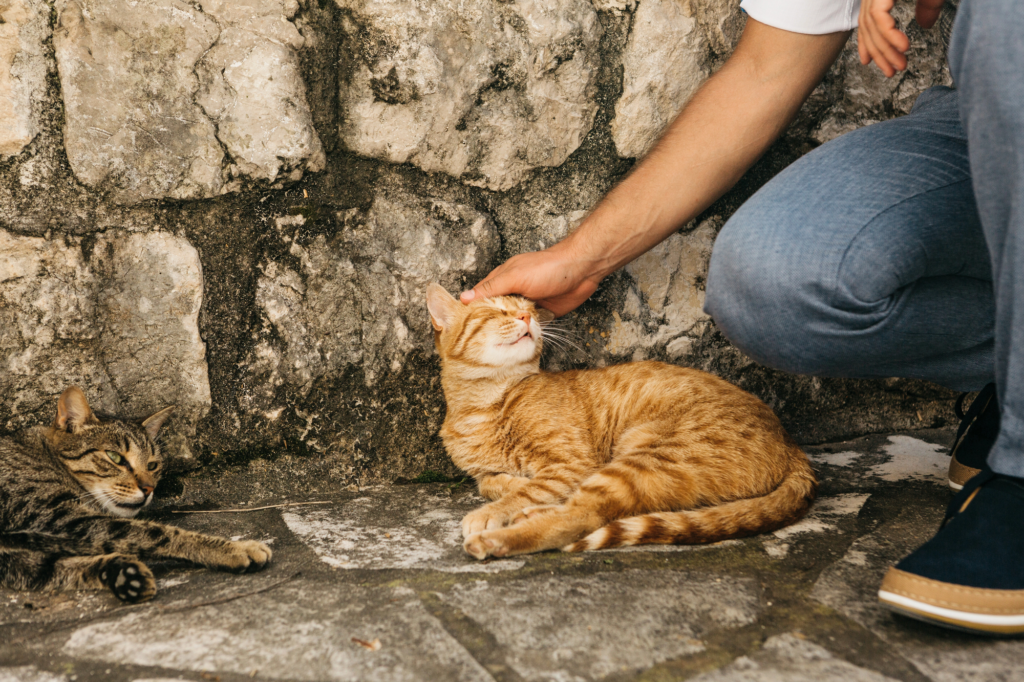
Some people find that it is easier for them to empathize with animals than with humans when under stress. It does not mean that animals “replace” other humans for these people, but that a different kind of interaction can also be valuable and fulfilling.
Street animals:
Do not demand emotional performance
Do not minimize pain or offer unsolicited advice
Do not impose social roles or expectations
Within a society where they are told to “adjust,” “be strong,” or “not overthink,” animals present an alternate relationship—that of coexisting rather than correcting. For the lonely, the withdrawn, or the emotionally exhausted, the idea of animal encounters could provide a refuge from the risks associated with human communication.
Care as a Two-Way Relationship
But it is important not to romanticize this association. Street animals are not objects for therapeutic use, nor are they mere recipients of kindness. Such associations are two-way, and they are based on shared vulnerabilities.
Street animals are entirely dependent on humans for food, water, safety, and periodic medical assistance. On the other hand, humans may find purpose and stability within a relationship with another living entity.
However, this is reciprocal.
Dog-feeding is more than generosity; it also entails responsibility. The routine memory is important because it builds continuity. The observation of when an animal is ill enhances alertness. These actions draw people away from isolation toward relationship awareness. In cities where people often feel disposable or invisible, caring for a being that recognizes them even wordlessly can restore a sense of purpose.
Mental Health in the Everyday, Not the Exceptional
Typical mental health storylines include those of struggle and recovery, or perhaps a dramatic transformation. But much of emotional well-being is really a function of commonplace, repetitive, and quiet moments.
The role of street friends in this regard is precisely what street animal companionship does:
It does not promise healing.
It does not claim cure.
It offers company.
Having animals around can provide a welcome respite from thinking for someone who’s dealing with grief, burnout, stress, and/or uncertainty in their life, as petting an animal or just being side by side with a dog can calm the person’s mind.
The action of feeding, petting, or even just observing animals as they breathe can calm the person as if in a natural way since it’s just something that happens without even thinking about it in the process.
This is mainly applicable in South Asia, where emotional expression can at times be limited by familial roles and societal definitions of masculinity and femininity.
Urban Isolation and the Loss of Touch
Cities are crowded and yet isolating. Physical proximity does not always translate to emotional connection. Many people go through entire days without meaningful touch or acknowledgement.
Street animals break this pattern.
Touching an animal—when done safely and respectfully—reintroduces physical connection without social complexity. A dog leaning against a leg, a cat curling up beside someone, a cow nudging for food—these moments reestablish bodily presence and remind people that they exist in relation to others.
This can be quietly profound for people who feel numb or disconnected from their emotions.
Gender, Safety, and Street Animals
For many women, the experience of public space is one based in caution. Street animals, particularly dogs, are commonly depicted in these contexts as threats. However, many women have experienced something entirely different when it comes to familiar street dogs in the evenings.
In cases where dogs are able to identify local residents, a degree of informal guardianship occurs, whereby dogs react to unrecognized movement or escort residents through laneways. This does not negate structural security problems but suggests a complex intersection of human-animal relations and gendered urban experiences.
At the same time, women also find themselves as the main caretakers of street animals that they feed – they organize sterilization surgeries, and campaign against violence. This role of caregiving may not be visible or remunerated but can act as a mechanism for establishing a sense of community as well as a means for enhancing mental health.

Not a Substitute, But a Support
It is absolutely necessary to make this clear: contact with urban animals is no substitution for expert mental health services, especially when it comes to seriously troubled or individuals struggling with psychosis. But it may be a helpful secondary level—one which is immediate, accessible, and indigenous.
The mental health ecosystem, when layered, consists of five layers:
- Clinical care when available
- Community support
- Informal practices of grounding and connection
- Prevention, promotion, and mental health literacy
- Policy, systems, and structural support
The pet friendship of street dogs is to be found in the third level. Ignoring it means overlooking a resource that already exists in people’s lives.
What We Miss When We Dismiss This Connection
In talking about stray animals only as problems, we neglect their social function. In talking only about mental health in terms of diagnoses, we neglect practices of relationship which carry people forward in their day.
The recognition of human-animal companionship does not mean adopting a Leverian approach to mental health care. A Leverian approach refers to a purely clinical, institutional model of mental health care that privileges formal diagnosis, expert authority, and medical intervention while sidelining everyday relational, community-based, and non-human forms of care.
Instead it is more about recognizing that it is taking place in the first place. In South Asia, life in urban areas is inherently relational, and it is so because it is a matter of survival and relates to other living beings. Street animals form a part of this web.
Toward a More Expansive Understanding of Care
Mental health does not only live in hospitals or counselling rooms. It lives on sidewalks, in alleys, outside shops, and near street corners where the human and animals share space.
Paying attention to such relationships does not debase the discourse of mental health; rather, it enhances the quality of discussion thereof.
It reminds us that:
Care does not always talk in clinical terminology
Support does not always appear to be given in a formal manner.
Healing is not always linear
Sometimes it appears to be a matter of quiet sitting beside a dog that asks for nothing except presence.
And sometimes, that presence is enough to help someone make it through the day.

Daraa Patel
Daraa Patel is a researcher and social impact communicator working at the intersection of mental health, gender equality, and technology ethics. She leads grassroots and digital initiatives that amplify marginalized voices and promote responsible media narratives in India.