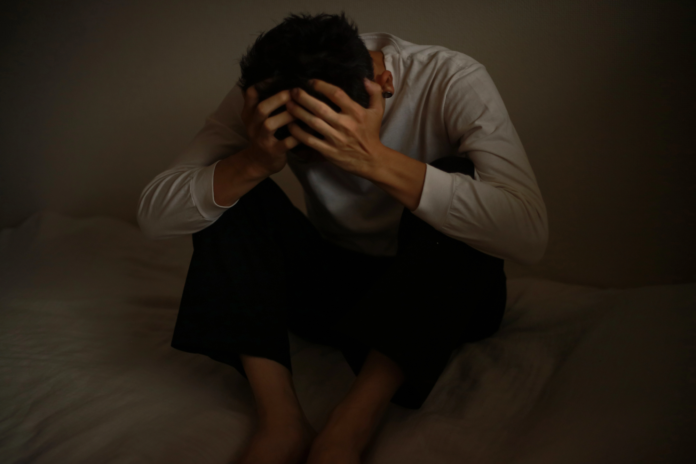

He was disfigured but appeared invulnerable. I was able-bodied but appeared fragile and defeated. How many layers did this encounter unfold?
I scribbled this in my notebook (memo book, rather) one evening while revisiting transcripts from my interviews with acid attack survivors who were men. I was sitting on my verandah, sipping black coffee as the monsoon breeze brushed my face and the hills across from me played hide-and-seek with the clouds. It was almost perfect—until that line pulled me back into the field, into the ethical, emotional, and political complexity of my research.
I began my PhD research by choosing to explore the mental health experiences of acid attack survivors in India. My initial inclusion criteria focused only on “women survivors above the age of 18.” That seemed natural at the time—after all, acid violence is legally categorized in India as gender-based violence, a crime predominantly affecting women.
But the field has a way of unsettling neat frames. Mine would be no exception.
How I Got Here: The Burden of the Male Gaze
Being a woman in a patriarchal society is not just a social location—it’s a structure of vulnerability. I grew up in a household that sought to “protect” me, but no protection could fully shield me from the unwelcome touches here and there, be it in the form of groping and rubbing in public vehicles or the persistent attempts and lack of shame of some men who preyed on adolescents like me—still learning the boundaries of our bodies and silenced by shame, unable to speak of touches we never consented to. These incidents got me thinking about what it means to be a woman in a patriarchal society.
Looking back, that was probably the inception of this research—before I had the words for it. Though I didn’t know it then, I was certain of it by the time I chose my PhD topic, which I decided to do on acid attacks, primarily because, first, outward beauty in patriarchal societies is a burden disproportionately placed on women; second, acid attacks often emerge from the rage of being unable to tolerate a woman’s ‘NO’ (Bhagawati & Priya, 2025), making it a crime of misogyny. I wondered, what does it mean to live with a scarred face in a society obsessed with unscarred ones?
Shifting the Frame: Men Survivors as “Othered” Victims
That question remained central until I encountered acid-attack survivors who were men, who made me realize how this framing itself—“gender-based violence”—could be a form of erasure. Their faces were just as scarred but their suffering remained unacknowledged; one man questioned why we [the interviewers] only came to hear the stories of women survivors, as if men like him were not survivors too (see Bhagawati, 2025).
His question cut deep, as it wasn’t just a plea but a critique, one I had chosen to ignore till then. He wasn’t simply asking to be included; he was exposing how men’s suffering becomes illegible in a framework where “gender-based” has come to mean “women-only”.
Stunned by his question and unable to form an appropriate response to it, I expanded my criteria to include survivors who were men. However, what I failed to anticipate in his words was that his plea to be considered did not mean he consented to share his story with me. More importantly, his “Yes” was in no way an affirmation for all survivors who did not fit the criteria of gender in the “gender-based” scheming for acid attacks in India. Here “gender” is understood in terms of only binary gender identities, that of a man and a woman.
Unlike the women survivors, whose suffering was quickly folded into a framework of gender-based violence, the men remained ambiguously positioned: not feminine enough to evoke sympathy, not masculine enough to retain status. Some quietly resisted the role of “victim.” Others clung to a stoic silence that, I later realized, was a form of armour.
Some wanted to speak, but their words never came out. Others had their narratives pre-scripted by family members who mediated access and control. Let me highlight one such moment.
“Scorned Lovers Aren’t Always Men”: Beyond the Binary
Having now decided to include the narratives of survivors who were men, I assumed the process would unfold with the same ease: their willingness to share would act as a quiet invitation, and my sense of reassurance as a researcher stemming from not having to battle hierarchies that might otherwise hinder our interview exchange.
That was until I faced the strong NO, not by a survivor but by his family. A ‘no’ that carried a thousand questions. Had I crossed an invisible line? Should I have rephrased my request better? I couldn’t stop thinking about the refusal. Was it shame? Fear? Protection? Was it the exhaustion of always having to explain yourself to people who just want a story? These questions stayed with me—until I found a reason that somewhat eased my self-doubt.
I had met the survivor in one of the centers of an NGO I had ties with to conduct my research.
He was a young boy, 18 years of age at the time, with barely any scars, albeit one side of his face was tainted red. Also, he had one functioning eye. I jotted down these details quickly, the researcher in me excited about the possibility of getting to interview a survivor transitioning from adolescence to young adulthood.
He came with his parents and sister, holding a pet bag containing his Persian cat. Feeling both nervous and excited to interview an adolescent boy survivor, I found myself becoming cautious about how I entered the space. I chose to keep a respectful distance, interacting first with his cat and only occasionally with him and his family.
Everything seemed to go fine. I decided not to request an interview immediately, having met him only moments earlier. What puzzled me was the reaction afterwards, as every attempt of mine to reach the survivor was thwarted—by his family. I was even bluntly asked not to call again, as “they” were not interested in giving me an interview. Here, “they” referred to the family members—even though I hadn’t requested to interview them.
However, respecting the family’s privacy, I did not approach them again, although I was still confused about their response. Later, I found out how his attack had a gender aspect, one that remains entirely absent within the framework of gender-based violence. As it turned out, scorned lovers aren’t always men. They could also be people who do not identify themselves as “cis-men”—be it the victim or the perpetrator.
In this case, while the details around gender identity were never clarified by him or his family, hints from service providers and my own observations and interactions suggested a reality far more complex than the usual binary of man and woman. That silence, and the family’s perceived fear of what such disclosure might expose, meant that his story could not fit the dominant narrative of acid violence. That misfit brought with it a stigma so profound that the family severed ties with the NGO, choosing instead to privately fund his care.
A Life Lived in Shadows: The Case of Men Survivors
Having told the story of a failed attempt at an interview, let me now get back to my earlier question from the man survivor. Ethnographic fieldwork involves prolonged engagement in the field, and mine was no different. Every day that I visited the field site, a café run by acid attack survivors, I began to notice stark contrasts.
On one hand, I would see the women survivors, usually confident, never hiding. And then there would be the man survivor who would not only wear a pair of sunglasses indoors to cover his non-functioning eye but also actively cover his face with a handkerchief every time he stepped out of the café. Paradoxically, however, the men survivors I interviewed in my study were all married, with children, while the majority of the women survivors remained unmarried.
Yet, most of the men hid. They hid their scars, they hid their emotions, and they hid their suffering. Sure, on the surface, the men seemed to fare better socially after attacks, but that recovery often masked internalized stigma, emotional suppression, and an invisibility so profound it bordered on erasure.
As a man survivor once told me:
“Usually, people say that the person must have done something; that’s why such a thing happened to him or her. I was 12-13 years old at that time, and I never had any fights with anyone, had never even done anything wrong that such an incident happened with me. I ask God, why did he do such a thing with me?”
In a country where male victimhood is not only unseen but also berated, their lives unfold in the shadow of suspicion, where even victimhood must be proven again and again.
Gender-Based. . . But Whose Gender Counts?
This brings me to the pertinent question: when we say “gender-based,” we must ask, whose gender are we really talking about? Whose suffering is heard? And who is left unseen—not just by the state, but even by critical mental health researchers like myself? What are the implications of framing violence as gender-based, which is implicitly cis-feminized, as in the Indian scenario?
In India, acid attacks are classified as gender-based violence, but in practice, they’re treated exclusively as crimes against women—as seen in National Crime Records Bureau (NCRB) data (NCRB, 2022).
Government compensation schemes reflect this too: women are eligible, but men must fight for recognition. Those who don’t fit the binary—trans survivors, queer victims—often don’t even try. This pushes one to ponder if the framing of “gender-based” has become a gatekeeper of the legitimacy of their victimhood status. To speak of gender-based violence, in such an instance, is not only to ask who was attacked but also who is allowed to grieve, to be heard, and to recover.
My fieldwork taught me that gender identity does not guarantee access to empathy. If anything, it reveals who empathy is withheld from. And in that silence, another kind of violence quietly takes root, one that is brought about by the silencing of their suffering due to the dyadic understanding of gender and a refusal to acknowledge the spectrum, as well as its intersection with other social phenomena such as caste, class, and patriarchy. This gives shape to such a violence in the first place.
Acid attacks are often gendered; there’s no denying it. But gender is not reducible to gender identity only. The men survivors in my study were not seeking to replace the women in their narratives. They simply wanted to exist within it, in a spectrum. And in doing so, they exposed something even more uncomfortable: that even in our attempts to fight patriarchy, we sometimes reproduce its silences.
References:
Bhagawati, M. (2025). Unravelling the spectrum of victimhood within patriarchy: methodological self-consciousness in a constructivist grounded theory study with acid attack survivors in India. Qualitative Research in Psychology, 1-21. https://doi.org/10.1080/14780887.2025.2595055
Bhagawati, M., & Priya, K. R. (2025). Suffering and radical healing among women survivors of acid attack in India: a qualitative study using an augmented reality comic. Qualitative Research in Psychology, 22(4), 943-968. https://doi.org/10.1080/14780887.2025.2521533
National Crime Records Bureau. (2022). Crime in India 2022 (Statistics Volume 1). Retrieved from https://ncrb.gov.in/uploads/nationalcrimerecordsbureau/custom/1701607577CrimeinIndia2022Book1.pdf
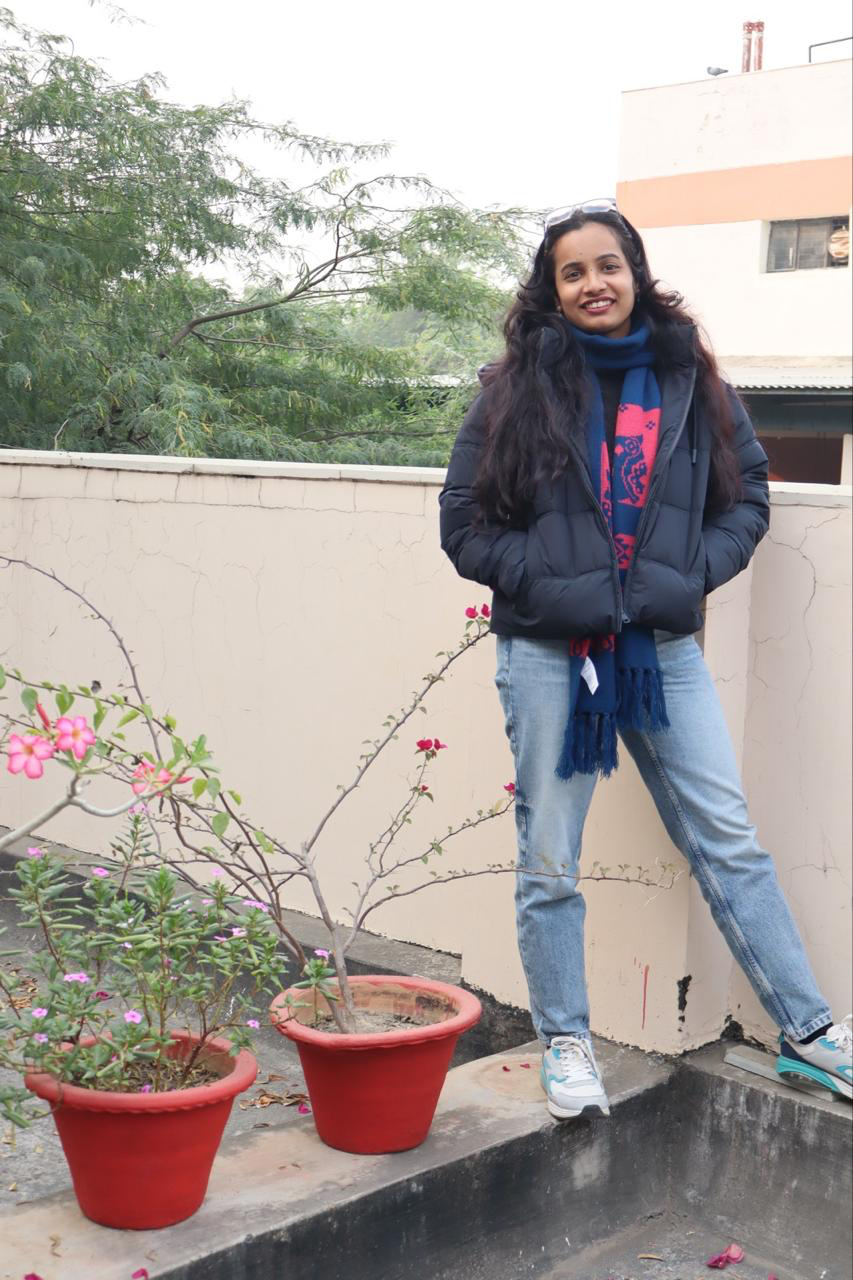
Mridusmita Bhagawati
Mridusmita Bhagawatiis a PhD scholar in Psychology at the Department of Humanities and Social Sciences, Indian Institute of Technology Kanpur, India. Her doctoral research focuses on the mental health experiences of acid attack survivors in India. Beyond academia, she is an avid reader, an enthusiastic runner, a tennis fanatic, and a music lover, with eclectic tastes ranging from hip-hop and country to Hindi classical.