
I am a very quiet reserved writer and, above all, very careful about the information I make public regarding my personal experiences. In the 32 years I have been hearing voices and having visions, I have learnt that we live in a world that turns everything that appears in the media into a commodity, especially anything to do with mental health. ‘Extractivism’ exists, and those of us who have experienced madness should know that, even in our processes of resilience, recovery, and empowerment, the healthcare system is lying in wait to capitalise on our resilience.
Below is a short description of my experience at the Mad in the World Film festival in Norway, a festival that brought out the voices of madness without silencing them in categories, where our stories were welcomed but not extracted, and where our experiences were shared but not exploited. The fact that this occurred in the midst of art, films, and poetry and not at an academic conference giving lip-service to lived experience, might have played a part in having a true celebration of the range of human experience, international cooperation, and emotions.
I have returned delighted from the “Rethinking Mental Health” International Film Festival in Norway, where I was invited by the “Locura en el Mundo” (Mad in the World) magazine network, of which I am a part as editor of the online magazine “Locura en Argentina”. (Mad in Argentina)
On the first day, all the editors of the affiliated magazines were part of a meeting where we shared our achievements and challenges. I outlined my aim to publish more personal stories from people who have experienced hearing voices, seeing visions or going through unusual emotional states.
The films at the festival were mainly documentaries showcasing stories of people who recovered from traumatic situations by helping others, as well as documentaries on innovative mental health services and research into mental health and human rights. Among the fiction films screened at the festival that I enjoyed the most, I recommend the biopic “Love & Mercy” (USA, 2014) and the romantic comedy “The Dance Club” (Sweden-Norway, 2025).
“Love & Mercy” is a biopic about the life of Brian Wilson—songwriter and singer for the band The Beach Boys—that exposes the brutal psychiatric abuse inflicted upon him by Dr. Eugene Landy. Through mistreatment, isolation, and manipulation, Landy stripped the artist of his autonomy and dignity, exploiting his talent and popularity for his own gain. The film denounces how the narcissistic authority of therapists—under the guise of treatment—can destroy lives, driven solely by a hunger for power and the need to satisfy an ego.
“The Dance Club” is a romantic comedy set at the “Care” neuropsychological clinic, a facility where profit takes precedence over human well-being. The plot follows Markus, a psychology intern who begins meeting secretly with four patients at the clinic outside of official working hours. Together, they form “The Dance Club,” staging impromptu, absurd dance interventions in public spaces as a way to alleviate emotional suffering. Through dance, emotional expression, and visits to locations tied to their most painful experiences, the group seeks to confront shame, resist oppression, and foster their own transformation—all while challenging the cold, clinical nature of the institution.
Alan Robinson and Karin Javert
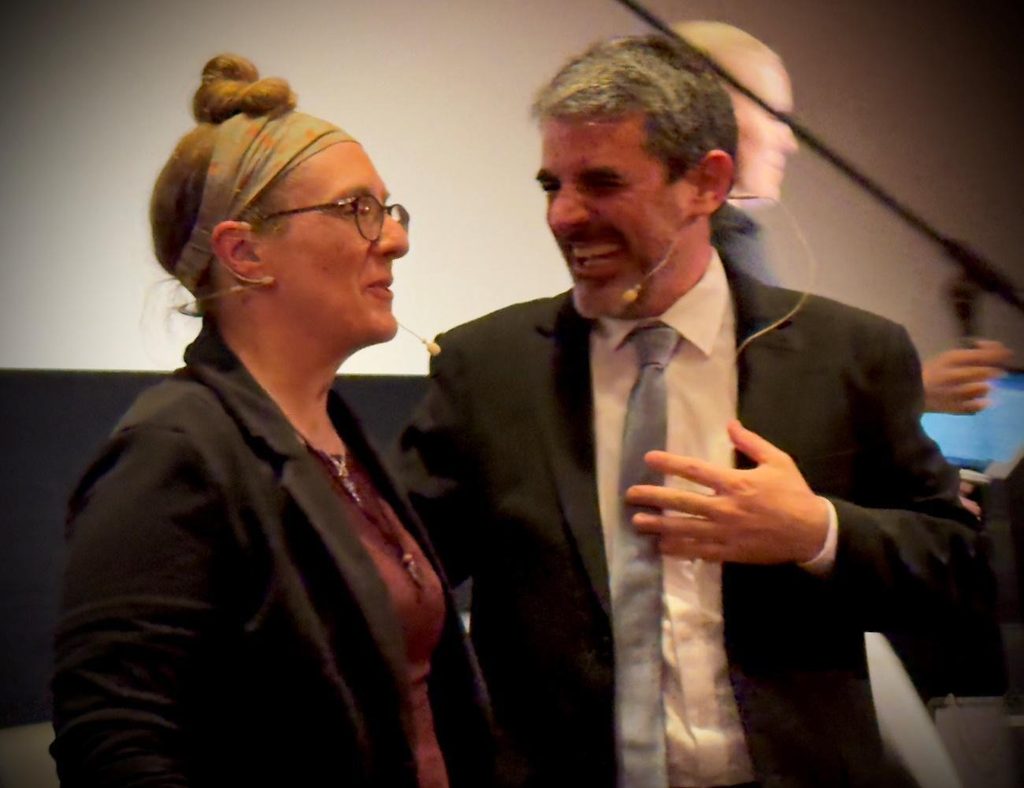
As part of the three-day film programme, on Friday evening I hosted a variety show alongside the American poet Karin Jervert. In the photo, we’re joking around after I got confused and made a complete fool of myself by saying in English, “It’s an honour for you to introduce me on this evening of poetry.” I improvised on the spot, as clowns are so good at doing: I owned up to the mistake in front of the audience with complete honesty so they could have a laugh at my expense.
I treated myself to singing ‘Por una cabeza’ (‘By a head’s length’) and ‘Mi Buenos Aires querido’ (‘My Beloved Buenos Aires’) in Buenos Aires Spanish. We had no more than half an hour to rehearse the two tangos and capture that very special musical atmosphere that a tango singer conveys. I was very nervous because I also had to present the other acts in the variety show and, after singing the tangos, read my poems in English.
Alan Robinson and Emannuel Manulov
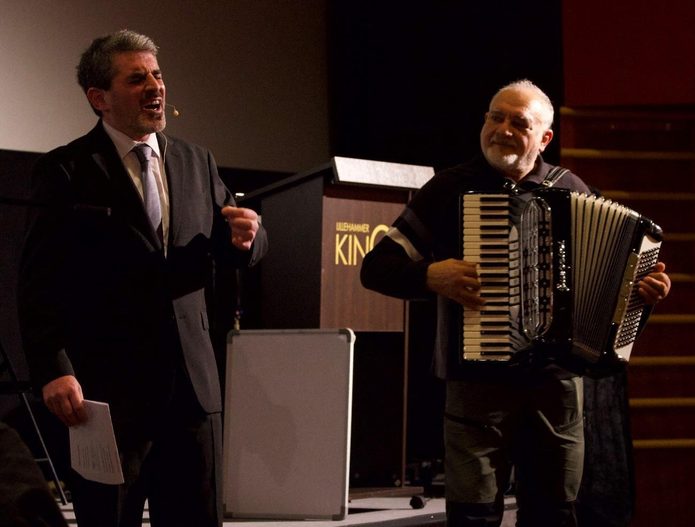
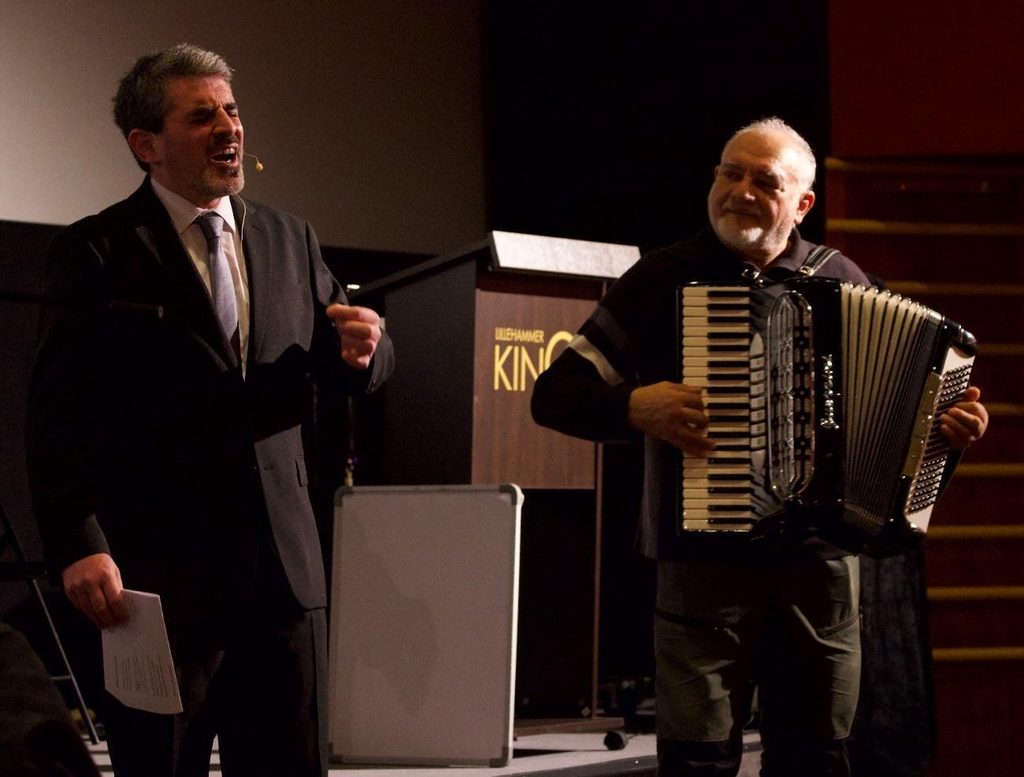
The Norwegian musician Dag Leonardsen had invited his Bulgarian colleague Emannuel Manulov, who played the accordion – an instrument with a sound very similar to that of a bandoneon. Manulov didn’t speak English, but with just a glance, he told me everything I needed to know so that we could stay in time. Bjarne Övrelid, also Norwegian, accompanied me on guitar, and when we were rehearsing and I needed to quickly ask him to slow the tempo down, I made gestures as if I were crying. Every second counted.
The bandoneón is a central instrument in tango, which is why I felt a strong connection with Emannuel Manulov while singing—it provided a sense of accompaniment. I was extremely nervous, and since we couldn’t communicate in English, I had to rely on gestures to ensure the two songs went well. It’s a good thing Manulov wasn’t a psychiatrist; otherwise, he surely would have injected me with medication to calm me down.
Language serves a dual function: it communicates, and it expresses. One of the major differences between artistic languages and communication with a mental health therapist is that, in a therapeutic context, the expressive function of language is pathologized. Regrettably, mental health therapists have legitimized and normalized the practice of interpreting the expressive aspects of language as clinical symptoms.
I sang the tangos in the Buenos Aires dialect, but as most of the audience wouldn’t understand, I added a bit of acting and also gave an introduction explaining how ‘Por una cabeza’ celebrates all the follies of life and ‘Mi Buenos Aires querido’ promises an end to sorrows and the chance to forget. It went very well, much better than I’d expected, and some people in the audience even joined in, singing the choruses. The intuitive accompaniment by accordionist Manulov was key to creating that very special atmosphere of a Buenos Aires night. He looked me in the eyes whilst we were rehearsing, as if he knew the verses of “Mi Buenos Aires querido”.
I long once more to gaze upon
Those eyes that caress with their gaze
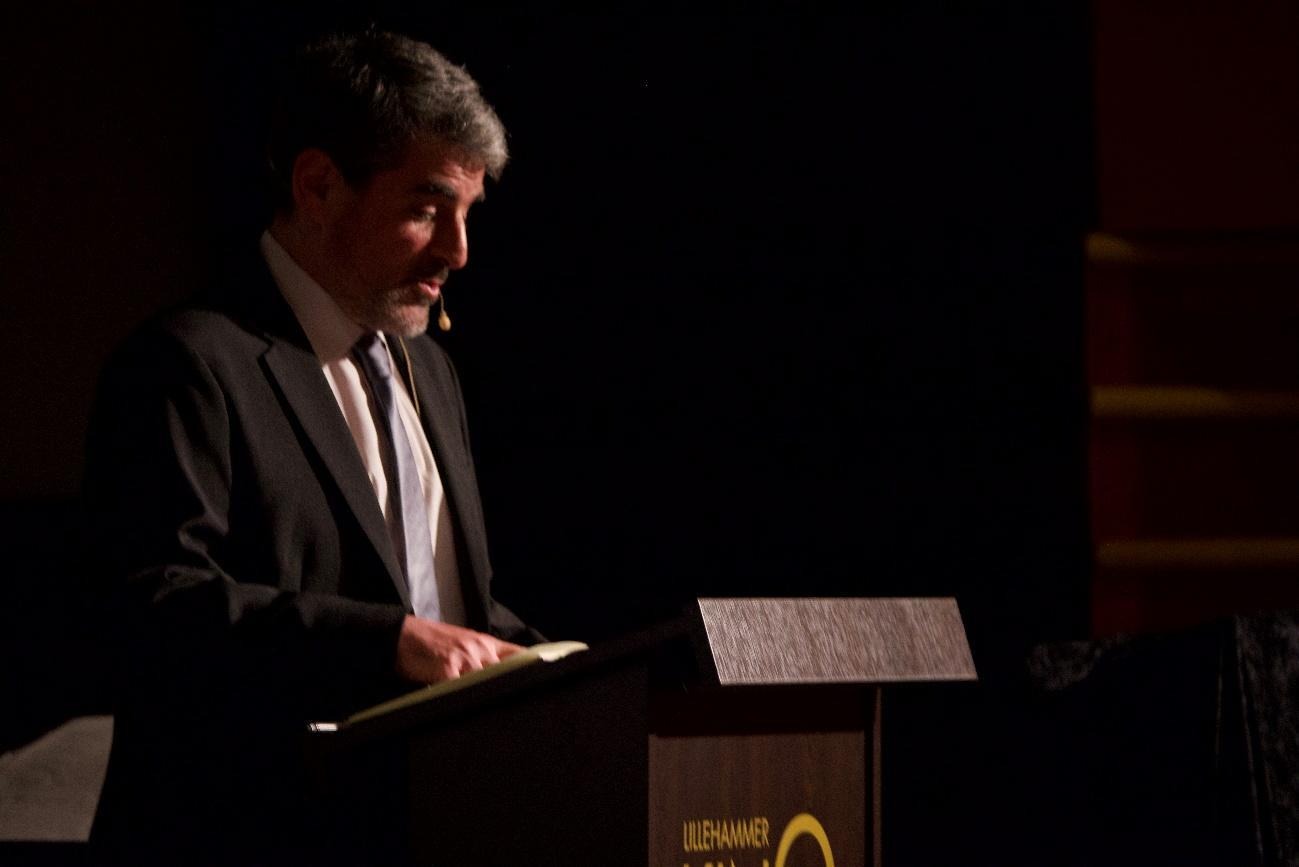
I read four of my poems translated into English, which have not yet been published in any book. When reading the poems in English, I had to add a touch of interpretation to the pauses, tone and rhythm, because translating a poem from one language to another significantly alters the composition of its metaphors. Art is a universal language that allows us to express ourselves and communicate, even if we do not share the same language.
At this festival, cinema, poetry and music served as the international bridge that our societies need to celebrate all our follies, as the tango ‘Por una cabeza’ puts it.
I had brought some of my books to sell, but I didn’t have too many expectations because most of the audience was from Europe and the United States. But I was lucky that there were people at the festival who read Spanish and Portuguese, and I sold a few of my books. On my way back, I managed to find time to visit the Henrik Ibsen Museum, which is a guided tour of his own home. I still feel a warm sensation in my chest from having had the opportunity to share my poetry with people from 18 countries around the world.
The Spanish version of the article is below.
COMO ME FUE EN NORUEGA
Soy bastante reservado y, sobre todo, muy cuidadoso con la información que hago pública sobre mis experiencias personales. En los 32 años que llevo escuchando voces y teniendo visiones, he aprendido que vivimos en un mundo que convierte todo lo que aparece en los medios en una mercancía, especialmente todo lo relacionado con la salud mental. El «extractivismo» existe, y quienes hemos vivido la locura deberíamos saber que, incluso en nuestros procesos de resiliencia, recuperación y empoderamiento, el sistema de salud está al acecho para sacar provecho de nuestra resiliencia.
Volví feliz del Festival Internacional de Cine “Re-Pensar la salud mental” en Noruega, invitado por la red de revistas “Locura en el Mundo”, de la que soy parte como editor de la revista web “Locura en Argentina”.
En el primer día todos los editores de las revistas afiliadas, realizamos un encuentro para poner en común logros y desafíos. Presenté mi propósito de publicar más historias personales de quienes hayan tenido la experiencia de escuchar voces, tener visiones o haber experimentado estados emocionales poco frecuentes.
Las películas del festival fueron mayormente documentales que mostraban historias de personas que se recuperaron de situaciones traumáticas ayudando a otros, documentales sobre servicios de salud mental innovadores y de investigación en salud mental y derechos humanos. Entre las películas de ficción programadas en el festival que más me gustaron, recomiendo la biopic “Love & Mercy” (USA, 2014) y la comedia romántica “The Dance Club” (Suecia-Noruega, 2025)
“Love & Mercy” es una biopic sobre la vida Brian Wilson, compositor y cantante del grupo musical “The Beach Boys”, que expone la brutal violencia psiquiátrica ejercida por el Dr. Eugene Landy sobre Brian Wilson. Mediante abuso, aislamiento y manipulación, Landy anuló la autonomía y dignidad del artista para aprovecharse de su talento y popularidad. La película denuncia cómo la autoridad narcisista de los terapeutas, bajo el disfraz de tratamiento, puede destruir la vida de las personas, solo por la ambición de poder y satisfacción del ego.
“The Dance Club” es una comedia romántica que se desarrolla en la clínica neuropsicológica “Care”, donde el lucro prima sobre el bienestar humano. La trama sigue a Markus, un pasante de psicología que comienza a reunirse clandestinamente en la clínica con cuatro pacientes fuera del horario laboral. Entonces forman “The Dance Club”, para intervenir en espacios públicos bailando, de forma improvisada y ridícula para aliviar el sufrimiento emocional. A través de la danza, la expresión emocional y visitas a lugares que representan sus experiencias más dolorosas, el grupo busca confrontar la vergüenza, resistir la opresión y fomentar su propia transformación, desafiando la naturaleza fría de la clínica.
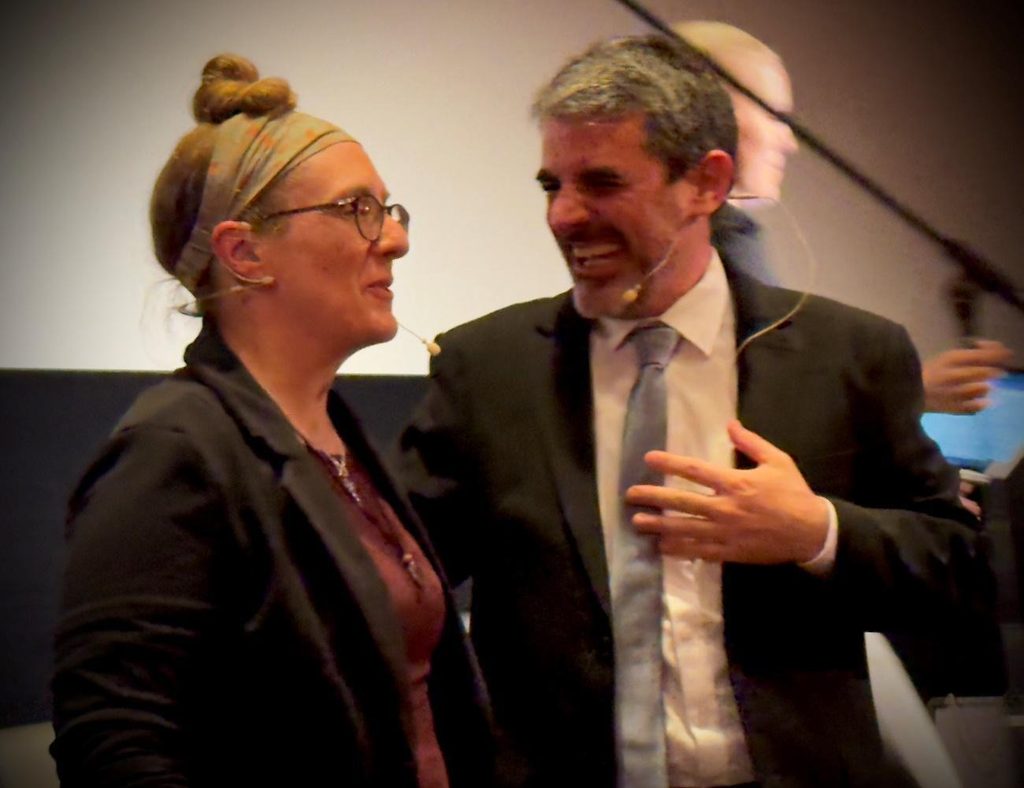
Además de la programación de 3 días de películas, en la noche del Viernes, presenté una varieté junto a la poeta estadounidense Karin Jervert. En la foto estamos bromeando luego de que yo me confundiera, haciendo un papelón, luego de decir en inglés “Es un honor para vos presentarme a mi, en esta noche de poesía”. Resolví en el momento como bien saben hacer los payasos, acepté el error frente al público con total honestidad para que pudieran reírse de uno.
Me di el gusto de cantar “Por una cabeza” y “Mi Buenos Aires querido” en castellano porteño. Tuvimos nada más que media hora para ensayar los dos tangos y lograr ese clima musical tan especial que transmite el cantor de tango. Yo estaba muy nervioso porque además tenía que presentar los otros números del varieté y después de cantar tangos, leer mis poemas en inglés.
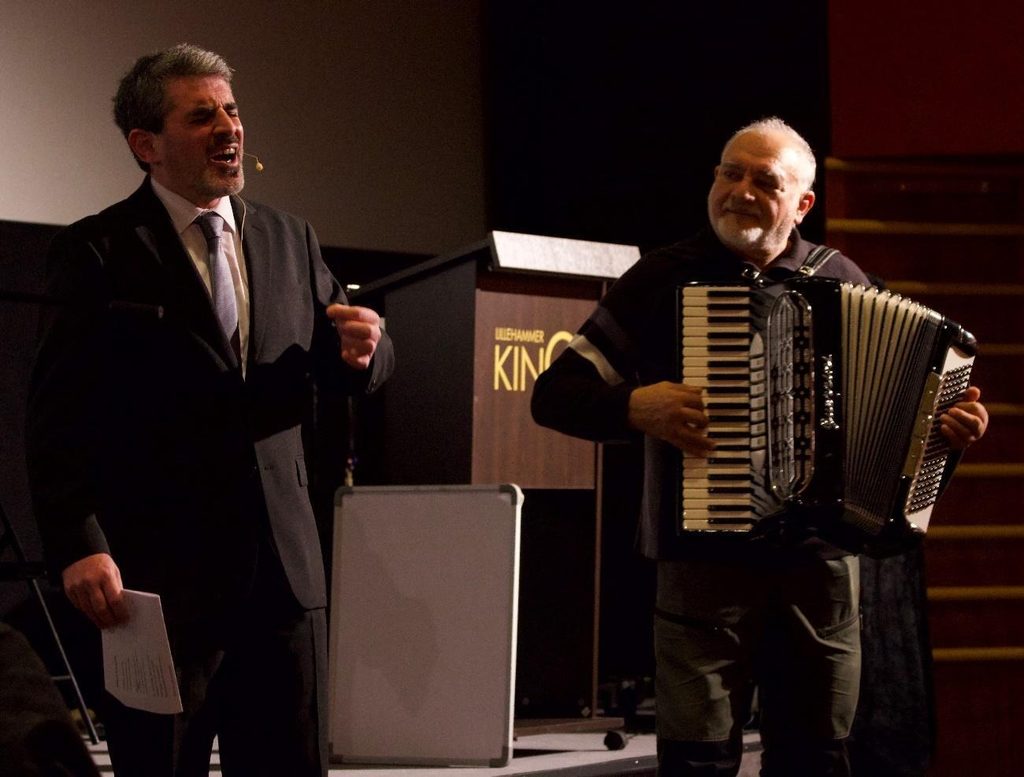
El musico noruego Dag Leonardsen, había invitado a su colega búlgaro Emannuel Manulov, que tocaba el acordeón, que tiene un sonido muy parecido a un bandoneón. Manulov no hablaba inglés, pero con la mirada, me decía todo lo que me tenía que decir para que vayamos a tempo. Bjarne Övrelid, también noruego, acompañó en guitarra y cuando ensayábamos para pedirle rápidamente que baje el ritmo, le hice gestos de llorar. Cada segundo contaba.
El bandoneon es un instrumento importantisimo en el tango, por lo cual me apoye mucho en Emanuel Manulov para cantar y sentirme acompañado. Pero para eso debíamos lograr comunicarnos en muy poco tiempo y yo estaba nervioso porque no podíamos comunicarnos en inglés, y debía recurrir a la gestualidad para que las dos canciones salieran bien. Menos mal que Manulov, no era psiquiatra porque seguro me hubiera inyectado medicación para que me calmara.
El lenguaje tiene una doble función: por un lado comunica y por otro expresa. Una de las grandes diferencias entre los lenguajes artísticos y la comunicación terapéutica, es que en la comunicación terapéutica se patologiza la función expresiva del lenguaje. Los terapeutas en salud mental, lamentablemente han legitimado y naturalizado que pueden interpretar la expresividad del lenguaje como sintomatología clínica.
Los tangos los canté en porteño, pero como la mayoría del público no iba a entender, le puse un poco de actuación y además hice una introducción sobre cómo “Por una cabeza” celebra todas las locuras y “Mi Buenos Aires querido” promete el fin de las penas y el olvido. Salió muy bien, mucho mejor de lo que esperaba e incluso algunas personas en el público se animaron a acompañar cantando los estribillos. El acompañamiento intuitivo de acordeonista Manulov, fue clave para lograr ese clima tan particular de la noche porteña. Me miraba a los ojos mientras ensayábamos como si conociera los versos de “Mi Buenos Aires querido”.
Quiero de nuevo yo volver a contemplar
Aquellos ojos que acarician al mirar
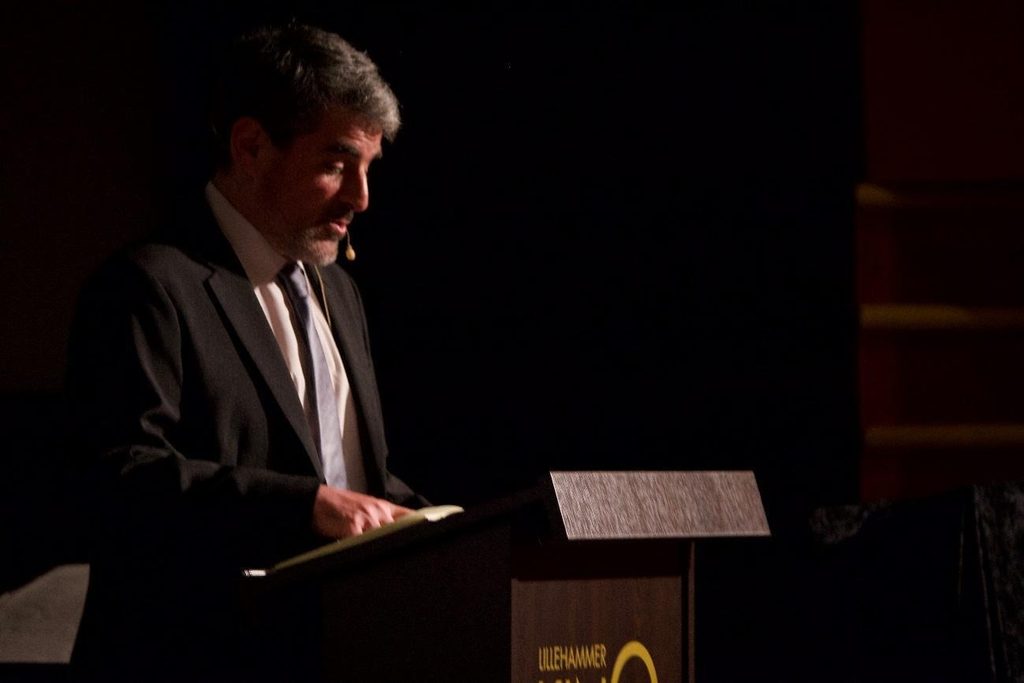
Leí 4 de mis poemas traducidos al inglés, que aún no fueron publicado en ningún libro. A la lectura de los poemas en inglés les tuve que sumar un poco de interpretación en las pausas, el tono y el ritmo porque la traducción de un poema de un idioma a otro, cambia mucho en la composición de sus metáforas.
El arte es un lenguaje universal, que permite expresarnos y comunicarnos, aunque no compartamos el idioma. En este festival el cine, la poesía y la música fueron el puente internacional que las sociedades necesitamos para celebrar todas las locuras, como versa el tango “Por una cabeza”.
Alan Robinson
Alan Robinson was born in 1977; he lives in Argentina and works as an author, teacher, and speaker. He is dedicated to writing, publishing, and selling his books. He writes in a wide variety of genres, including humor, crime fiction, theater, and essays. His fiction explores universal human experiences related to neurodivergent characters. His essay collections contribute to the development of a theoretical framework that recognizes hearing voices and visions as real and legitimate experiences.
He holds a bachelor’s degree in dramatic arts and a master’s degree in education. He has directed 22 theatrical productions. He has published seven books. He edits the online magazineMad in Argentina.He advises the Argentine government on the use of plain language, pictograms, and psychosocial accessibility to break down the social barriers that prevent people with disabilities from participating in education and cultural life. He sells his books by bike in Buenos Aires and by post to the rest of the world via his website:www.alanrobinson.ar