
“ Aaye ho meri zindagi mei tum Chamaar ban ke,
Mere jute saaf karna tum polish se chamka ke,
Aaye ho meri zindagi mei tum Chamaar ban ke…”
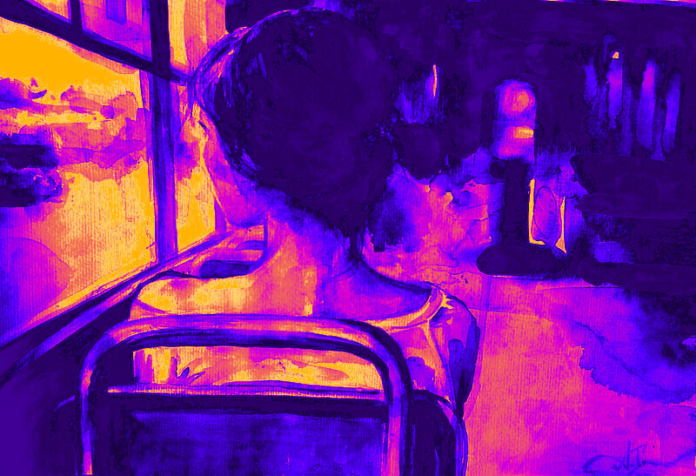
I know these are not correct lyrics, these are not right lyrics as well (please read right from the lens of a socio-legal perspective). I was recently travelling by bus, and heard the song “Aaye ho meri zindagi mein tum bahar ban ke” (the correct version) one of India’s world-famous songs. Suddenly, from somewhere, I recalled the incorrect version (mentioned above). This song helped my memories of travelling in a similar bus. All along the ride, I was constantly in fear that I might now sing this version, which I learned at school, the site where I came back even after leaving it eight years ago.
I remembered in school, the jokes that were made on people; their uniform, their lunch, their family, extended family, and many, many other things, which was very common. I now know the things that were made fun of have a name, Intersections of Identity. I was also part of those jokes. Not as the one cool joker (what we call those who make the jokes, I still don’t know) but the one who was joked about. From my hair to my teeth, to my “ladko wala naam” (a name that could be a boy’s name too), to my namak paratha, there was no shortage of connections to make jokes on me.
One fine day, we were sitting in the classroom where we (actually not me, I was the excluded party, friend of no one) were playing antakshari, once again, one of India’s world-famous game of songs. Suddenly, the song ‘aaye ho meri zindagi mei tum baahar ban ke’ started. In a moment, this baahar (spring) changed into chamaar, then the next line also changed. For a moment it felt okay, something I should not be concerned about, and honestly, this moment was long enough, I remembered this day long enough. I came home on that day singing this song (yes, the new one I learned). In the evening, while I was doing my homework, I started singing the newly learnt song. The song was not even complete when I heard my name from Baba. He was angry, and this was unusual, against his nature. Anyway, I went to him while still humming the song.
Wrong idea, Wrong day, Wrong place, and most importantly, Wrong song.
I got scolded. What were the exact words? It is blurred now in my memories, but I remember one line of Baba, ‘tum kisi ko kaise bol sakte ho mere jute saaf kar’ (‘how can you tell someone, “clean my shoes”!’ ). Honestly, I was still confused about what he meant, but I understood this was not a good thing to say or sing. I thought about sharing this ‘information’ with my fellow friends, perhaps I should say not friends. The next day, I went and tried to be a teacher, again; Wrong idea, Wrong day, Wrong place.
People started laughing, some commented ‘kyun tu hai…kya yeh’, (‘why are you…what is this’) I was still confused, but I now knew I would not be the one who would sing this version. More than anything, I knew if I did this, Baba would get upset, and this was enough to stop me from singing that song. There were times I unconsciously recalled those lines, but I was time and again stopped by Baba ka pyar (love for my father) and not the consciousness about caste politics; this was a long journey that came later in my life.
As my life proceeded many similar songs, jokes, and so on came my way. Similarly, understanding, consciousness and sensitivity also crossed my path. I was in higher secondary school when one of my friends came to my home, and following some incident, that friend said ‘chaprasi sala!’(‘that bloody/damn peon’, a caste based slur). I was shocked as much as I was afraid of how Baba would react to this. Baba was silent, and I was now more frightened. In the evening, Baba and I had a chat, and he asked me one question, ‘Do you also use these words?’. ‘No’, I replied, this was the first time I somehow got to know about the caste system, stigma, and stereotypes about / among and in society. However, there was still a lot to know; there was still a lot that needed to be known.
School ended, and a new chapter started at university. Baba used to say, the best thing about school was that it had a uniform; on the contrary, for me, one of the best things about university was the choice of clothes. On my first day, I understood why Baba said those things. The clear difference between the clothes and the bag, to school, and so on helped me build an understanding not just about the caste system, but also my positioning, my ignorance about my identity, and my privileges. Among my friends, there were also some from the ‘upper caste’ who were/are supporters, they knew/knew my struggle. In many conversations while extending their support (verbal), they have said ‘tu kar legi, tere pass quota hai’ (‘you will do it, you have quota’) or ‘tera alag hai yaar tujhe zarurat hai quota ki baaki to yuh hi benefit utha rahe hai’ (‘your is different yaar, you need the quota, the rest are just taking the benefits of it’) and so on. Each time they said things like this, I used to feel distant from them, along with that came the feeling of them seeing me as incapable, someone ‘taking advantage / benefit’, or even that they are not extending this understanding of ‘you deserve’ to my extended community.
I used to think maybe they are empathetic because they have seen me, my family, and so on, but is it right that you only extend sensitivity to those who are in front of your eyes? What about the realities that are remote, not seen, not heard, and not felt at all?
Recently, I met my (‘upper caste’) friend. He usually doesn’t like what I wear (this article will not address this question, because I also don’t know, and I am still figuring it out). While clicking our picture, suddenly he said, ‘ye chamaro jaise kapde hi hai tu’. (‘these clothes are like those of Chamar, another caste based derogatory remark) I was shocked, humiliated, disappointed, maybe also, but most of the time I felt extremely sad. He then added the more problematic thing, ‘tujhe to keh sakta hoon, you are my safe space’ (‘I can say this to you, you are my safe space’). It was anger that got added to the other emotions I felt. I scolded him, and told him he was not just insensitive but this was also a violation of my fundamental right, for some reason (maybe it was the activism) I said ‘I work with/ on / about / among these identities and issues (since he already knew I am part of this community and is vocal about my community, I did not mention this).
I asked him to say sorry, and he did, but I kept thinking I asked him to say sorry, and then he said sorry. This particular incident reminds me of many of the things, if not all, where similar kinds of insensitive, inhumane jokes are made.
This incident also led me to question how someone in front of me dared to say things like that. You can take this as a part of my ego, I will take it as my responsibility, a responsibility I have towards my community, the responsibility in which I might have failed.
After this incident, this song came back into my life.
After years, I heard this song, and the fear also came back, ‘main galti se voh na keh doon, jo main is gaane mei sunti aayi hoon’ (I don’t mistakenly say, what I have been hearing in this song).
This was the exact feeling. The only version I had heard was the incorrect one; I never tried to listen to the original one, nor did it cross my path in all these years. Now, repeatedly in two travels, this song and these emotions (fears) were constantly present. While I am writing this piece, I know this fear was not invalid, or wrong, this fear of consciously and/or unconsciously doing something unjust should be around, this helps to differentiate between right and wrong (please read right and wrong from the lens of socio-political-economic perspective). However, I am also thinking there is a lack of similar fear in and among people that leads to jokes.
I don’t have an answer to this, but I can ask questions. My community has been deprived of this right, the Right to Ask. And in the end, I just want to ask:
The people who joke:
From where do you get the audacity to say things that are meant not to exist at all?
To the system that enables these jokes:
From where will the fear of commiting an injustice come amongst them?
(I am not including me, I already have this)
To the people who in their everyday lives face these jokes:
No questions, I know, I know, I know.

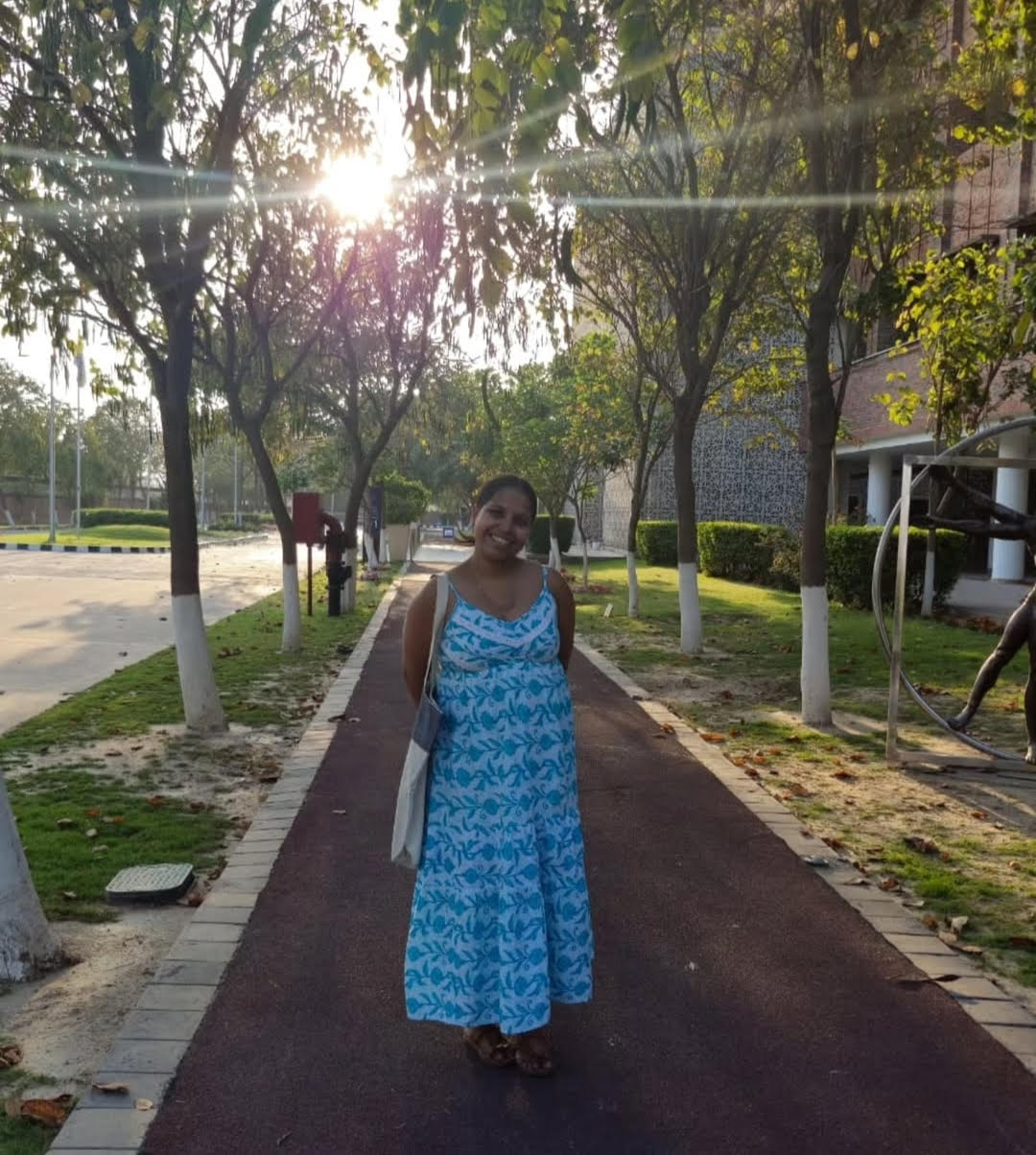
Rinku Kumari
I am Rinku, a Dalit-Dusadh woman, an Intersectional Feminist, a Storyteller, Artist, Researcher, and Writer. I am a first-generation learner in my community. I graduated in Political Science from the University of Delhi and have a Master’s in Women’s Studies from the Tata Institute of Social Sciences, Mumbai Campus. My area of interest and intervention lies in Gender, Anti-Caste work, Tribal and indigenous community rights, sexual reproductive health rights, Justice, Adolescent and Youth leadership, Mental Health, Well-Being, and Trauma-informed and sensitive approaches to work. Since 2017, I have been working in the communities of Delhi, Bihar, and Jharkhand on various feminist issues.