
Laila’s Story: ‘I don’t know what’s wrong with me.’
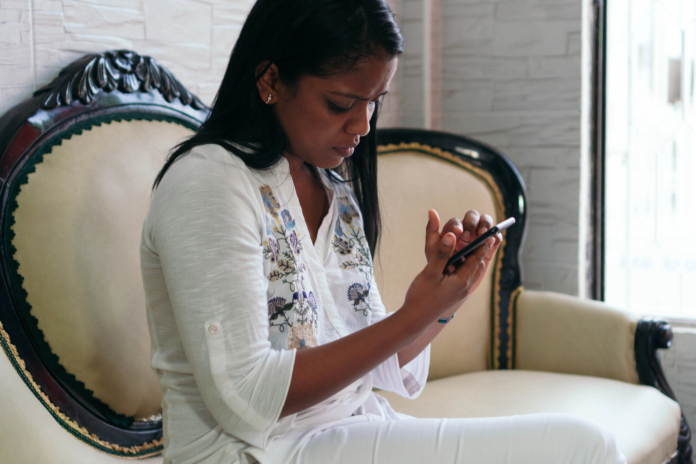
She was in her late thirties, neatly dressed, her posture careful in the chair in my therapy room. Laila did not say she was depressed. She did not tell me that she thought she had anxiety. She did not use any psychological language at all. Funny, given that she was in a psychologist’s office.
Instead, she told me that she felt exhausted even after sleeping. She told me she felt perpetually irritable. She told me she became angry quickly and then felt guilty for that anger.
“I don’t know what’s wrong with me,” she said quietly.
What Laila could not name was not unusual. It was deeply familiar.
A Country Full of Feeling – And Short on Labels
Here, emotional suffering exists without diagnostic labels. It shows itself through headaches that never leave, through bodies that refuse rest or a sense that something inside has gone numb. Distress is not absent here. It is widespread.
There is a persistent assumption, both within Pakistan and beyond it, that mental-health problems are somehow new or foreign – imported from the West along with therapy rooms and diagnostic manuals. This belief does not survive contact with lived experience. Pakistani communities have always had ways of understanding emotional pain. Distress is frequently framed through religious, cultural or moral narratives. People speak of kamzori (weakness), ghabrahat (restlessness), bojh (burden) or dil nahi lagta(the heart does not settle). They speak of fate, endurance, tests from God and responsibility toward family. These are not primitive or inadequate explanations – they are culturally embedded frameworks of meaning-making[i].
Laila had already tried to make sense of herself long before she walked into my therapy room.
She told herself she was tired because she worked too much. That the heaviness in her chest was just stress. That her sudden flashes of anger meant she was a bad person – an ungrateful wife, a failing daughter. Why couldn’t she cope when so many other people could? In a context where emotional struggle is moralised, distress easily turns into self-accusation. When the guilt followed the anger, she prayed. When prayer stopped soothing her, she wondered if God had stopped listening.
Anxiety and depression were explanations for distress that did not belong to her world. What did belong were reasons that carried moral weight: be patient, be more grateful, have more faith.
Her distress was not invisible. It was not in a diagnosis. But it was everywhere.
The Body Speaks First
When distress cannot be spoken safely as emotional pain, it often finds another route[ii].
Before she ever thought of her pain as emotional, Laila’s body spoke it for her. It started with headaches – the kind that sat behind her eyes all day. Then came the dizziness. Some days her hands went numb while cooking.
Laila went where most people go when the body hurts: the hospital.
She waited for hours in a crowded outpatient department. When her turn came, she described her symptoms carefully – the pain, the exhaustion, the palpitations. She did not talk about the overwhelm, the anger or guilt. These were not medical complaints.
She was given tests. They came back normal. She was given medication. And for a while, she felt better.
Then the symptoms returned.
When Survival looks like Symptoms
Culture shapes not only how we suffer, but how we speak about it[iii]. In Pakistan, psychological pain is often expressed through the body. Women speak of stomach problems, hair loss, painful or irregular periods, sleep problems or aches that cannot be explained by tests. These problems are acceptable.
But speaking directly about sadness, fear, anger or despair carries risk. It can invite blame, dismissal or accusations of weakness. The body, however, is a safer messenger. Pain in the chest is easier to admit than pain in a marriage. A headache is acknowledged while abusive parenting is not. Exhaustion is more acceptable than rage.
This is why women like Laila make up more than half of those attending outpatient departments of hospitals in Pakistan with persistent physical symptoms that do not fit neatly into medical boxes[iv]. Many are living with chronic stress and would meet the diagnostic criteria for anxiety and/or depression – even if neither they, nor their doctors, ever use those words.
The End of the Search – and the Beginning of the Problem
After the first hospital visit, Laila did what many women do. She went again. When the dizziness worsened, she tried another doctor. When her heart raced at night, she wondered if something serious had been missed.
Each visit followed the same pattern: careful descriptions of bodily symptoms, tests that showed nothing alarming, medication that helped briefly or not at all. Each time, the relief was temporary.
This is where many women remain stuck[v]– caught in a cycle where the body keeps speaking, but no one is taught to listen differently.
Over time, Laila began to worry not only about her health, but about becoming a burden. She apologised for being “difficult”. She wondered if she was imagining things. She stopped mentioning some symptoms altogether, afraid of being dismissed.
Eventually, someone named it.
A doctor said the words anxiety and depression. She was given medication. For the first time, her experiences were gathered under a single explanation. There was relief in this – a sense that she was not weak or failing, that there was a reason her body felt the way it did. A diagnosis gave shape to what had previously felt chaotic. It offered legitimacy. Even if it was stigmatised.
But it also narrowed the story.
Diagnosed for Surviving
Laila’s distress began with the limits placed around her life. She needed permission to leave the house. She accounted for her time. She measured her words carefully at home, especially with her in-laws. Arguments were not allowed to escalate – not because they were resolved, but because escalation carried consequences.
Her body absorbed what her voice could not safely express. Headaches arrived on days when conflict simmered but could not be spoken. Palpitations followed nights of swallowed arguments. Her exhaustion deepened as the emotional labour of keeping peace accumulated. Nothing about this was accidental. Women’s distress in Pakistan is rarely disconnected from the conditions of their lives[vi]. Laila knew stories of women who had spoken too loudly and paid for it – through abandonment, threats, shaming or worse. She had grown up hearing what happens to women who bring beizati (dishonour), who complain too much, who refuse to adjust or keep izzat (honour). Violence against women here is a warning system. Even when it is not enacted, it is understood.
So Laila did what many women do. She kept going. She did not name what was happening as emotional pain. Until her body forced the issue.
When the diagnosis finally came, it offered relief – not just because it explained her symptoms, but because it shifted the blame. Anxiety and depression meant she was ill, not ungrateful. Struggling, not failing.
And for a moment – the weight lifted.
But the diagnosis did not ask about power. It did not ask about fear. It did not ask what it costs a woman to survive inside a system that demands silence and endurance and calls it strength.
And so Laila’s suffering was named – but its causes remained intact.
From Symptoms to Systems
The mental-health crisis in Pakistan is often blamed on scarcity: too few psychiatrists, psychologists or health budgets[vii]. But scarcity alone cannot explain it.
The deeper problem is orientation. Across the world, mental-health is treated as if the problem lives only inside individuals – in their minds, their brains or their chemistry. Diagnosis and medication are offered as the solution.
But what happens when the problem is not inside the person, but in the life they are forced to live?
Emotional suffering often reflects the conditions people live under: poverty[viii], gender inequality, domestic violence, political instability, displacement, environmental disasters and daily insecurity. These are not “background stressors” in Pakistan – they are the fabric of everyday life. Pakistan is the South Asian country ranked lowest on the Human Development Index (HDI)[ix]. Here, growing up with poverty, insecurity and limited access to education or healthcare leaves lasting marks on mental-health and traps families in repeating cycles of hardship. This truth remains largely absent in the global mental-health agenda, where emotional suffering continues to be medicalised rather than contextualised.
So, when a person finally arrives in the consulting room of a psychiatrist, the system has trained the professional to look for disease – not distress. But distress and mental-health problems are often a reasonable response to unreasonable conditions.
Medication can soothe symptoms. What it cannot do is address the conditions that produce them. When distress is framed solely as illness, attention is quietly diverted away from poverty, patriarchy and structural violence – and redirected back onto the individual.
The burden shifts from systems to individuals.
Especially if you’re a woman.
The ‘Hysterical’ Woman
For centuries, women’s emotions have been medicalised. When women were angry, sad, outspoken or simply unhappy, medicine stepped in to explain it away. The historical diagnosis of ‘hysteria’ – turned social inequality into individual illness[x]. Women weren’t oppressed – they were “unwell.” This justified keeping women out of public life, education and professional spaces.
Hysteria may no longer appear in textbooks, but its spirit survives. Modern diagnostic manuals are filled with language that quietly pathologises women’s emotional lives. Over time, the number of gendered terms used in psychiatric diagnosis has exploded – from just over a hundred in early manuals to thousands today[xi]. Personality disorder labels like Borderline or Histrionic act as social rules – policing how women are allowed to feel, express and relate. Too emotional? Disordered. Too demanding? Pathological. Too angry? Unstable.
In patriarchal contexts like Pakistan, the consequences are severe. Women already carry the emotional labour of families, marriage and caregiving. When distress arises, Western psychological models frequently zoom in on the mother or wife, placing responsibility for emotional “problems” squarely on her shoulders[xii]. Broader family dynamics, economic stress, gendered violence and power hierarchies fade into the background.
The result is subtle but damaging: women are blamed for relational pain, while patriarchal systems remain untouched and unquestioned. Meanwhile, men’s suffering often disappears or is reframed bad behaviour, aggression or addiction.
The result: Women are over-diagnosed, men are under-recognised and neither group receives care that truly reflects their realities.
And as long as we keep treating social wounds as individual illnesses, we will continue to miss what is really hurting people
Laila did not Arrive Alone
What shows up in therapy rooms and doctors’ clinics in Pakistan rarely begins with the person sitting in the chair.
Laila did not arrive alone.
She carried generations with her.
Her distress did not start the year her sleep disappeared or the month her body began to ache. It began much earlier – before she had language, before she had choice.
Like many families in Pakistan, her history is marked by colonisation, Partition, war, displacement and political repression. These experiences are rarely spoken about openly or even consciously acknowledged[xiii]. But they are felt. Fear, grief and rage do not vanish when they are not named. They move instead – from parent to child, from body to body.
This is what we mean by transgenerational trauma.
When emotional pain is not worked through, it is passed on – shaping attachment patterns, emotional regulation, coping strategies and causing epigenetic changes. In many Pakistani families, this transmission shows up as silence, endurance, denial and self-sacrifice[xiv]. These are not individual choices; they become culturally embedded ways of surviving – particularly for women.
Laila learned early that feelings were dangerous. Her mother had learned the same from her own mother. Love was shown through duty, not words. Distress was managed by carrying on. Needs were swallowed, not voiced.
Parental trauma is linked to cycles of abuse, emotional neglect and long-term mental-health difficulties in children – including depression, substance misuse and self-harm[xv]. These patterns do not occur in isolation. They are intensified by poverty, unstable housing, political uncertainty and limited access to healthcare – realities that shape everyday life for many families in Pakistan.
In short: transgenerational trauma creates a ripple effect. And Pakistan is ripe for it.
Closing: The Weight of Unspoken Histories
When Laila struggled, professionals focused only on her: her symptoms, coping and emotional regulation. The generational context – the family she was born into, the history she inherited, the systems she lived within – remained invisible. This is not just a clinical oversight. It is a theoretical one.
Looking at history can completely change how we understand distress. Struggles are rarely just about one person. They are often shaped by family, community and the world people live in. Recognising how pain, patterns and coping habits travel through generations can be healing in itself – the spaces that individual checklists and assessments[xvi] usually miss. Naming these patterns – gently, respectfully, without blame – is often the first step toward real support.
In Pakistan, collective trauma has long been acknowledged outside formal psychology and psychiatry. Poetry, literature and theatre have allowed grief to be shared without diagnosis, allowing healing to occur without medicalisation[xvii]. Yet, these approaches remain marginal in mental-health policy and professional discourse in Pakistan.
Laila’s healing happened when her distress made sense.
Her distress did not begin with her. It carried the weight of histories that taught women to endure rather than speak, to hold families together at the cost of their own bodies, to turn anger inward. In a system trained to look for disorder, her pain was easily misread. In a culture that rewards silence, it was easily ignored.
What arrived in the therapy room as symptoms was, in fact, survival. But survival has a cost. When social wounds are treated as personal defects, women like Laila come to believe they are the problem.
She looked at me, searching for an answer she could carry back into her life.
“I don’t know what’s wrong with me.”
‘ Where are those who were allowed (long) ages to live and they enjoyed bounty? They were taught and they learned. They were given time and they passed it in vain. They were kept healthy and they forgot (their duty).’
Imam Ali (A.S.) – Nahjul Balagha[xviii]: Sermon 82, p.437
[i] Shafiq, S. (2020). Perceptions of Pakistani community towards their mental health problems: a systematic review. Global Psychiatry Archives, 3(01): 28-50.
[ii] Minhas, F. A. & Nizami, A.T. (2006). Somatoform disorders: perspectives from Pakistan. International Review of Psychiatry, 18(1): 55-60.
[iii] Kleinman, A. (1987). Anthropology and psychiatry: The role of culture in cross-cultural research on illness. The British journal of psychiatry, 151(4): 447-454.
[iv] Husain, N., Chaudhry, I., Afsar, S., & Creed, F. (2004). Psychological distress among patients attending a general medical outpatient clinic in Pakistan. General hospital psychiatry, 26(4), 277-281.
[v] Grover, S., & Kate, N. (2013). Somatic symptoms in consultation-liaison psychiatry. International Review of Psychiatry, 25(1), 52-64.
[vi] Mirza, I. & Jenkins, R. (2004). Risk factors, prevalence, and treatment of anxiety and depressive disorders in Pakistan: systematic review. The British Medical Journal, 328 (7443): 794.
[vii] Alvi, M. H., Ashraf, T., Kiran, T., Iqbal, N., Gumber, A., Patel, A. & Husain, N. (2023). Economic burden of mental illness in Pakistan: an estimation for the year 2020 from existing evidence. BJPsych international, 20(3): 54-56.
[viii] Gillani, S. F. H., Khalid, A. & Hanif, S. (2025). Effects of Poverty on Health and Social Status Among Older Adults in Muzaffarabad: A Phenomenological Study. Journal of Asian Development Studies, 14(1): 830-844.
[ix] Chachar, A. S. & Mian, A.I. (2024). Debate: Bridging the gap–role of nonspecialists in child and adolescent mental health care. Child and Adolescent Mental Health 29(4): 399-401.
[x]Cohen, B. M. (2020). A postcolonial critique of mental health: Empire and psychiatric expansionism. The Routledge international handbook of race, culture and mental health. Routledge.
[xi] APA (2022). Diagnostic and statistical manual of mental disorders (5th ed., text rev.; DSM-5-TR)., American Psychiatric Association.
[xii] Salberg, J., & Grand, S. (2024). Transgenerational Trauma: A Contemporary Introduction. Routledge.
[xiii] Chou, F., & Buchanan, M.J. (2021). Intergenerational Trauma: A scoping review of cross-cultural applications from 1999 to 2019. Canadian Journal of Counselling and Psychotherapy, 55(3), 363-395.
[xiv] Mazor, A. & Tal, I. (1996). Intergenerational Transmission: The individuation process and the capacity for intimacy of adult children of Holocaust survivors. Contemporary Family Therapy, 18(1), 95-113
[xv] Burchert, S., Stammel, N., & Knaevelsrud, C. (2017). Transgenerational trauma in a post-conflict setting: Effects on offspring PTSS/PTSD and offspring vulnerability in Cambodian families. Psychiatry Research. 254, 151-157.
[xvi] Isobel, S., Goodyear, M., Furness, T., & Foster, K. (2019). Preventing intergenerational trauma transmission: A critical interpretive synthesis. Journal of Clinical Nursing. 28(7-8). 1100-1113.
[xvii] Vostanis, P. (2024). Mental health provision for children affected by war and armed conflict. European child and adolescent psychiatry. 33(9), 3293-3299.
[xviii] Imam Ali ibn Abu Talib. (2009). Nahjul‑Balagha: Peak of Eloquence (M. Mutahhari, Commentary; Y. T. Al‑Jibouri, Ed.). Elmhurst, NY: Tahrike Tarsile Qur’an, Inc. (Original work published ~10th century CE). https://www.duas.org/pdfs/Nahjul-Balagha.pdf

Kavish Sangji
Kavish Zehra Sangji is a Trauma-Informed Psychotherapist with over 13 years of experience running a private practice in Pakistan, where she works primarily with adults. She is currently in the second year of a Doctorate of Professional Skills (DProf) in Psychological Trauma. Her academic and clinical interests include Adverse childhood experiences, Transgenerational trauma and Women’s mental-health, with a particular focus on culturally situated forms of distress. Outside of clinical and research work, she can usually be found buried in a good psychological thriller or getting lost in conversations with friends that begin anywhere and end nowhere in particular. She also firmly believes the best way to know a city is through its restaurants!