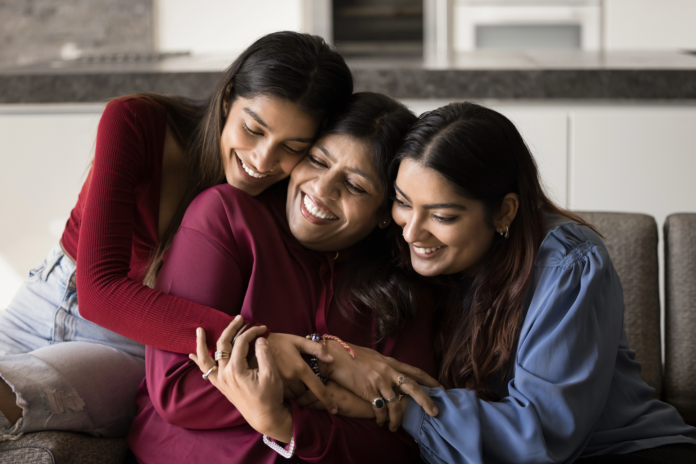


My mother has lived with severe anxiety for as long as I can remember. But she is also a woman who loves dancing, always warmly welcomes everyone in her home, can start conversations with strangers, loves hanging out with her friends, and has raised three children while navigating severe financial hardships.
It is to document these multitude of stories of people living with psychosocial disabilities that I started Whispers of Care.
This project was born out of my doctoral research journey, which brought me very close to the experiences of people living with psychosocial disabilities institutionalised in psychiatric hospitals, living in halfway homes, and receiving treatment at community mental health programs in India. When I started my fieldwork, I expected to hear the dominant discourses of institutionalised mental health care with the themes of human rights violations, family abandonment, biomedicalization and suffering.
While this was true, I also witnessed something I hadn’t expected. I witnessed flashes of joy tucked into the daily humdrum of institutionalised life and sparks of care that passed from one person to another. These were not grand gestures but small moments of one person showing up for the other.
At the psychiatric hospital, in the female ward, I saw a female attendant help a woman tie her saree and braid her hair while telling her to take care of herself as she readied her for discharge.
At the male ward, I saw a man, a wheelchair user with speech impairment, playfighting with another man. They are unable to communicate via words, but they are both laughing and playing along.
At the halfway home, post lunch, as everyone’s lying down on the floor to rest, residents join in gleefully when a woman suddenly starts singing her favourite song, “Oh Tunir maa, tomar Tuni kotha shone na…”
On another day, as one of the longest-staying residents of the halfway home is being discharged, everyone gathers around her, asking, “You will miss us, right?”
At the community mental health program, a woman, who escaped an involuntary hospital admission, tells me how she looks forward to her art therapy group every weekend at the community centre because that’s when she finds some time for herself.
These brief moments reveal something beyond the dominant discourse of mental health care in our country. They reveal, again and again, people’s instinct to find each other, to build community, and to hold one another up, even within institutions that tend to isolate them. They show how a person with psychosocial disabilities is just a person, and not a problem to be solved, a diagnosis to be made, a subject to be medicated and isolated.
People with psychosocial disabilities are often labelled as persons devoid of intentionality, agency, and know-how. But this is not the full story; I witnessed how they express resistance through their collective voices and have skills gathered from their lived experience to navigate everyday social suffering. Hence, I started Whispers of Care to document stories of mental health care, survival, and joy from around the country.
Whispers of Care is envisioned as a slow-evolving space. There is no expectation of form, type, deadline, or word count for a story. Stories can arrive at any time in any format – articles, zines, poems, photo-essays, art – whichever allows people to share their stories in their own way.
Like how my mother says every night on the phone to me, “Keep your phone on, I will call you if I feel restless.” Whispers of Care shall always stay an open space for anyone who is feeling distressed to come, share, witness and be witnessed.
Explore here: www.whispersofcare.in

Neha Jain
Neha Jain is a doctoral scholar at the Department of Humanities and Social Sciences, IIT Kanpur. In her doctoral work, she is exploring institutionalized and de-institutionalized mental healthcare settings in India to understand the nature of care and recovery in mental health through the experiences of various stakeholders. She is also a counseling psychologist trained in trauma-informed therapy and works through an attachment lens with people in their early adulthood years. Apart from therapy and research, she loves reading personal newsletters and listening to Desi rap music.