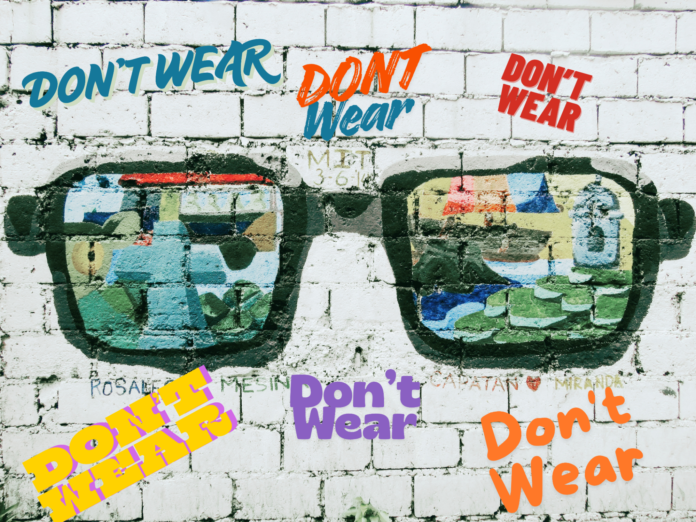


A month ago, I just wanted to go to my village, about 60 kilometers away from where I live. When I asked my parents to take me, my father initially refused, saying there were no facilities. The house had not been visited in a long time, it was not clean, and transport was uncertain (we would have had to depend on an auto, which drivers often refused because the roads can get slippery). When we thought about it more, we realised the problem was not the absence of facilities, but it was the presence of a mindset.
After some persuasion, he agreed. But a day before we left, he looked at me and said, “Don’t wear sunglasses if it’s cloudy.” And on the day we were leaving, he repeated, “Don’t wear them when we are going in the car.”
Just two words: ‘don’t wear’
Yet they meant far more than their literal meaning. They revealed a pattern that carried years of silence, shame, and unspoken fear.
For me, sunglasses are not fashion, they are comfort. They protect me from the harsh light my eyes cannot handle. But for him, they were something else, something that would “make people talk,” something that would make my disability visible.
That moment reminded me of all the times society has told disabled people what to do, not for our well-being, but for their comfort.
Don’t wear this
Don’t walk that way
Don’t ask for help
Don’t look different
Don’t make people around us uncomfortable
Sometimes the barrier is not the disability, it is the instructions people impose on us in the name of being “normal.” My father wasn’t trying to hurt me; he was repeating what society had conditioned him to believe: that disability must be hidden, managed, adjusted, but never seen.
But why should I be the one to shrink myself?
Why should I feel guilty for a body I did not choose?
Why must I sacrifice my comfort to protect society’s opinion of what is “normal”?
If it is their dignity, pride, and status that matter to them, why should I strip away my dignity?
I have every right to wear what makes me comfortable, to live the way my vision allows, and to exist without apologising. Disability is not something I “wear” that can be removed to make others feel better.
That day, I realised the real journey wasn’t from my home to my village, it was from dependence on others’ approval to confidence in myself. If anyone should feel uncomfortable about my disability, it should not be me.
Let the world adjust to accommodate disabled people. It was built for the abled, yet it expects us to adjust.
Two simple words, ‘don’t wear’, revealed a hard truth:
The world is not built to include us;
It is built to shape us into what it wants to see.
And I refuse to shrink into that shape.
I choose both my glasses and my dignity.

Divya S
Divya S, is a visually impaired writer from India who writes on disability, dignity, and social inclusion, drawing from lived experience. She is a commerce graduate.