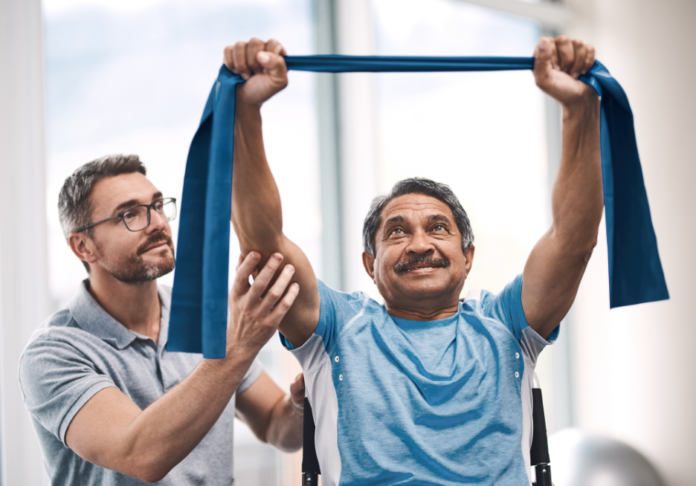


This decade has been announced by the WHO as the Decade of Healthy Ageing (2021–2030), a global collaboration to improve the lives of older people, their families, and the communities in which they live. Healthy aging includes both physical and mental health. That is precisely why this piece is co-authored by a mental health practitioner and a physical trainer, writing together.
In this piece, we will look at the specific mechanisms of the intertwining of the two concerns for geriatric populations. Decline in physical and neurological function mutually accelerate with ageing, yet the two are still largely treated as separate problems by different professionals. Furthermore, the cascade is silent, gradual and cumulative, and by the time depression, isolation, or cognitive decline is visible, the chain has been running for years. Let’s look at it holistically.
Functional mobility is the ability to perform daily tasks, stay normally active, and remain independent. There is a wealth of research on how simply walking decreases risk of heart disease and diabetes, and helps manage obesity. Muscle strength is a great indicator of physical function, as it exhibits age-related changes and decline over time (Martins et al., 2024). Muscle mass decreases approximately 3–8% per decade after the age of 30, with the rate of decline accelerating after 60, and as a direct result, functional mobility begins to deteriorate (Volpi et al., 2010). It is not that people do not want to be active, but it physically becomes harder as muscle strength starts weakening.
But this is not only a physical reduction in movement, this is also psychological.
With a reduction in mobility, the person adjusts, withdraws, and compensates before anyone notices; they may stop going out alone or stop driving. Their hobbies may reduce, the people they may meet are fewer, and the world shrinks just a little bit.
There is also a subtler, often overlooked mechanism at work here, fear of falling affects many older adults and functions as a chronic psychological stressor, triggering withdrawal from physical activity. Between 13–50% of those affected by fear of falling experience a decrease in social activities as a result. This means that the fear alone, independent of an actual fall, begins to do damage (Kim & Woo, 2025). Fear stops you moving, which makes you more fearful.
The Vicious Cycle that Traps the Elderly
There is another compounding effect to consider here. Those with difficulties in conducting basic daily activities are two to three times more likely to experience depression; research also shows a significant link between mobility limitations and psychological distress including depression and anxiety (Gyasi et al., 2023). And then depression itself closes the door on the one thing that might help – being active and mobile. These constraints in everyday life are not just an inconvenience, they are a clinical risk factor.
It feels like mobility can be a window into the whole person; as we age, what we lose physically, we also lose psychologically.
Not everything is about the individual, obviously. Our society has an important contribution. Urban design and our built environment have their part to play. Transportation barriers and non-walkability of public spaces have been associated with depression and anxiety in older adults, with loneliness mediating roughly 80% of that relationship, making transportation and mobility broadly a mental health determinant, not just a physical one (Choi & Marti, 2025). In its 2020 report, the National Center for Mobility Management explicitly identified loss of mobility and lack of transportation as risk factors for social isolation in later life.
It would not be an overstatement to say that the experience of loneliness in its intertwining with depression (Bandyopadhyay, 2024) is a defining feature of the 21st century society, and this is intensified with age.
It is at this intersection of social living conditions where the stakes escalate and where the combined perspective of mental health and physical training becomes most important.
We want to stress the looping effect physical mobility has on cognitive function. If physical mobility allows for greater social involvement and mental activity resulting from socialising, then social withdrawal, isolation and loneliness is moderating our cognitive capacities. In other words, our ability to move is directly related to our ability to think!
The data clearly shows that persistent functional impairments even in cognitively normal older adults can lead to higher risk of cognitive decline and dementia over time (Ghahremani et al, 2026). A recent, large-scale study, with over 6,00,000 participants, found that loneliness increased the risk for Alzheimer’s disease by 14%, vascular dementia by 17%, and cognitive impairment by 12% (Luchetti et al., 2024).
Here, in front of us is a Mobius strip, where the inside and the outside are indistinguishable: functional mobility, mood states, social connection, and cognitive ability fold into one another so completely that treating any one of them in isolation misses the whole.
The problem is the solution!
Older adults must start consciously working on physical activity and exercise regimens, around the time that mobility and muscle strength is reducing. And the research is very robust here (Wu & Huang, 2025). Resistance training is among the most widely recommended forms of exercise for older adults, with well-established benefits across multiple health parameters. Crucially for our argument, the improvements in muscle mass and strength that come with resistance training have been directly associated with favourable changes in brain structure and function, as well as improved mental health outcomes (Cunha et al., 2026). The evidence is clear, but the obstacle is perception.
Two concerns come up again and again, and both are worth addressing directly. One is the fear of falling, already discussed before. Resistance training done in measured steps will, in fact, help in developing balance and stabilization, and thus prevents falls and injuries.
The other problem is the fear of gym culture! There is the perception in our society that physical training is for young people who go to gyms, use heavy machines, and have a big, muscular physique. However, a gym is not necessary, neither are heavy dumbbells. And it is not only for the young. Here we turn towards the research about resistance training in older adults, which is clear on what it takes and it is far less than people assume.
Resistance training performed at least twice a week, sustained over six months, has been shown to reverse pathological structural changes in the brain and improve cognitive function, with the greatest benefits seen in those already experiencing some degree of cognitive decline (Nicola et al., 2024).
And the intensity required is within the normal range of activity. Moderate intensity is defined simply as exercise you can perform while maintaining a conversation, typically across sessions of 30 to 60 minutes (Li et al., 2025).
Twice a week. Conversational pace. That is a good enough start.
What it Looks Like in Practice
The goal here is not body building or athletics, and it is important to lay that out clearly. The goal is maintaining the functional strength that keeps daily activities possible… not only to get up from a chair, climb a flight of stairs, or carry a bag of groceries, but to be able to carry the weight of one’s own body through life.
The principles of resistance training, when adapted thoughtfully for older adults, are very accessible. The foundational principle is progressive overload, which simply means the body must be gradually and consistently challenged in order to adapt. This does not require weights, machines, or a trainer standing over you. It requires intention and consistency. A movement that feels effortful today becomes easier over weeks, and that is precisely when it needs to be made slightly more demanding, with more repetitions, perhaps even a slower tempo, or a more challenging variation.
The body is always responding to what is asked of it, and it will progressively pick up the challenge. Another principle for a beginner: technique before load. This means movement quality must precede any increase in difficulty, to get the posture and form right. This is also what makes resistance training safe.
No single program works equally for everyone. Training variables should consider age, medical history, mobility, training experience, lifestyle stress, genetics, and goals of training. The training programs will adapt to the individual, and not the other way around. This means there is a training program for everyone.
It is also worth knowing that early gains in older adults are largely neurological. The nervous system becomes more efficient and coordinated before muscles visibly change. This is why the first six months of consistency matter more than intensity. The body is learning before it is visibly changing, and that process is already protecting the brain.
Add to that knowing when to rest. Recovery is where strength is actually built. Rest days between sessions are good, in fact they are part of the program. Take some time to exercise, and then take some time to recover. Sleep, hydration, and nutrition all directly determine whether the body adapts or breaks down.
Thus, effective resistance training requires progressive challenge, proper recovery, technical precision, long-term consistency, and individualised programming. The goal is not simply lifting heavier weights or building a more muscular physique. It is a fuller life, where health and wellbeing are actively prioritised, and where the mind and the body are treated as active and creative at every age.
What the research and the lived experience of older adults tells us is this: the world shrinks when a person can no longer do what they used to do. Resistance training reverses that logic. Every small gain in strength is a door reopening. There is a specific quality to the mastery that comes from physical strength that is different from other interventions. It is embodied, it is visible, and it is felt in daily life. Bending to put on shoes, standing up more easily, walking more steadily. These become quiet acts of dignity. Here is to the Decade of Healthy Ageing.

Sabah Siddiqui
Dr. Sabah Siddiqui is Assistant Professor of Psychology at the School of Interwoven Arts and Sciences, Krea University, India. She is the author of Religion and Psychoanalysis in India (Routledge, 2016). Sabah has co-curated special issues for Psychoanalysis, Culture & Society (2024) and the Annual Review of Critical Psychology(2018). Her research engages critical psychology, psychoanalysis, and the politics of mental health, with a focus on gender, culture, and care. She is co-editing a volume on Ageing and Wellbeing in India: Phenomenological and Psychoanalytic Perspectives for Routledge (forthcoming in 2027).

Rollen Frantz
Rollen Frantz is a clinical and sport nutrition expert who focuses on integrated health. He has a masters in science and a diploma in the field of exercise science, yoga and exercise physiology. He is the Director of Zeeva Fitness and Health Care (Zeeva Fitness LLP). In 2024, he was awarded for his work in leardership at the Health 2.0 Conference in Dubai, for the goal of 'Making The Difference'.